
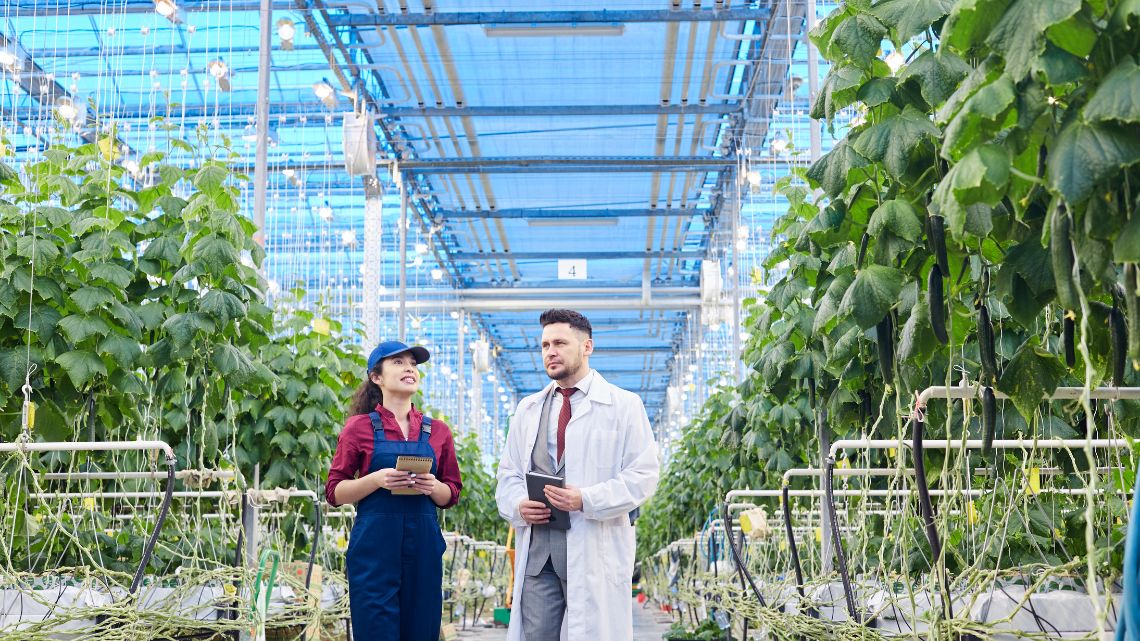
Agriculture has always depended on engineering, even when it was not formally recognised as such. Irrigation canals, drainage systems, storage structures, and farm machinery are all products of applied engineering principles. What has changed in recent decades is the scale and urgency of the challenges agriculture must address. Population growth, water scarcity, soil degradation, and climate variability are placing unprecedented pressure on food production systems. As a result, agricultural engineering has evolved from supporting farming operations to shaping the way global food systems operate.
Today, the discipline sits at the intersection of mechanical design, environmental management, and data-driven decision-making. Agricultural engineers are tasked not simply with improving productivity, but with ensuring that agricultural systems remain stable and resilient under changing environmental conditions.
Managing Water as an Engineering System
Water management remains one of the central concerns of agricultural engineering. In many regions, rainfall patterns have become less predictable, while demand for irrigation continues to increase. Traditional irrigation approaches often distribute water uniformly across fields, regardless of variations in soil type, crop demand, or weather conditions.
Modern agricultural engineering addresses this inefficiency through precision irrigation systems. These systems combine soil sensors, weather forecasting, and automated controls to deliver water where and when it is needed. The goal is not only to reduce water consumption but to maintain consistent crop growth despite environmental variability.
Designing such systems requires careful attention to hydraulics, pump efficiency, pipe networks, and energy use. Engineers must also consider long-term maintenance and reliability, especially in regions where infrastructure support is limited. Water delivery in agriculture has therefore become a complex engineering network rather than a simple distribution problem.
Soil as an Engineered Resource
Soil is often treated as a natural resource, but from an engineering perspective it behaves as a dynamic structural medium. Compaction, erosion, and nutrient depletion alter its mechanical and hydraulic properties over time.
Heavy agricultural machinery, while essential for productivity, can compress soil layers and reduce permeability. This limits root growth and restricts water movement, ultimately affecting crop performance. Agricultural engineers now design machinery and field operations to minimize these effects. Equipment weight distribution, tire pressure control, and traffic patterns are all engineered to protect soil structure.
In addition, drainage systems and erosion control measures are designed to maintain soil stability across entire landscapes. These interventions reflect a shift toward treating soil as infrastructure that must be actively managed.
Mechanization and the Changing Farm Workforce
Agricultural labor shortages are becoming a significant issue in many parts of the world. In response, mechanization and automation have accelerated across the agricultural sector. Tractors equipped with GPS guidance, automated harvesting machines, and robotic systems capable of monitoring crops are becoming more common.
Mechanical engineering plays a central role in this transformation. Machines must operate reliably in variable outdoor environments where dust, moisture, and uneven terrain introduce challenges not typically encountered in industrial facilities. Equipment is designed to withstand continuous seasonal operation while remaining serviceable in remote locations.
At the same time, engineers are increasingly focused on machine precision. Modern agricultural equipment is expected to perform tasks such as planting, fertilizing, and harvesting with high positional accuracy, reducing waste and improving crop yields.
Data Integration in Agricultural Systems
Digital technologies are rapidly influencing agricultural engineering. Sensors embedded in fields, irrigation systems, and machinery generate large volumes of data about soil moisture, crop health, equipment performance, and environmental conditions.
The engineering challenge lies not only in collecting data but in translating it into actionable decisions. Agricultural systems operate on seasonal cycles where timing is critical. Delayed information can reduce the value of otherwise accurate data.
Engineers are therefore developing integrated platforms that combine sensing technology with automated responses. Irrigation systems adjust flow rates based on real-time soil conditions. Machinery schedules adapt to crop maturity levels. These systems aim to improve both efficiency and resilience in agricultural operations.
Energy and Sustainability Considerations
Agriculture consumes significant amounts of energy through pumping, transportation, and mechanized operations. At the same time, farms are increasingly viewed as potential sources of renewable energy through solar installations, bioenergy systems, and energy recovery from agricultural waste.
Agricultural engineers are responsible for integrating these energy systems without disrupting food production. Solar-powered irrigation, for example, requires balancing energy generation patterns with water demand. Similarly, bioenergy systems must process waste efficiently while maintaining environmental safeguards.
Sustainability considerations now influence decisions about machinery design, irrigation infrastructure, and land management strategies. Engineering solutions must support productivity while reducing environmental impact.
Designing for Climate Variability
Climate variability introduces uncertainty into agricultural systems that were traditionally optimized for stable conditions. Changes in rainfall intensity, temperature patterns, and extreme weather events can disrupt crop cycles and damage infrastructure.
Engineering responses include improved drainage networks, climate-resilient irrigation systems, and crop management technologies capable of responding to sudden environmental changes. Agricultural infrastructure must be designed to withstand both drought and heavy rainfall within the same region.
This requires a systems-level approach where water management, soil stability, machinery operation, and crop requirements are considered together rather than as separate technical problems.
Engineering the Future of Food Production
Agricultural engineering is increasingly recognized as a critical discipline in global food security. The challenge is no longer limited to producing more food, but to producing it reliably under environmental constraints and resource limitations.
Solutions must balance productivity with sustainability, automation with resilience, and technological innovation with practical field conditions. Engineers working in agriculture operate at the intersection of natural systems and engineered infrastructure, where small design decisions can influence entire growing seasons.
As climate pressures intensify and global demand continues to rise, agricultural engineering will play an increasingly central role in shaping how food systems function. The success of modern agriculture will depend not only on biological advances but on engineering systems capable of managing water, soil, energy, and machinery as an integrated whole.