
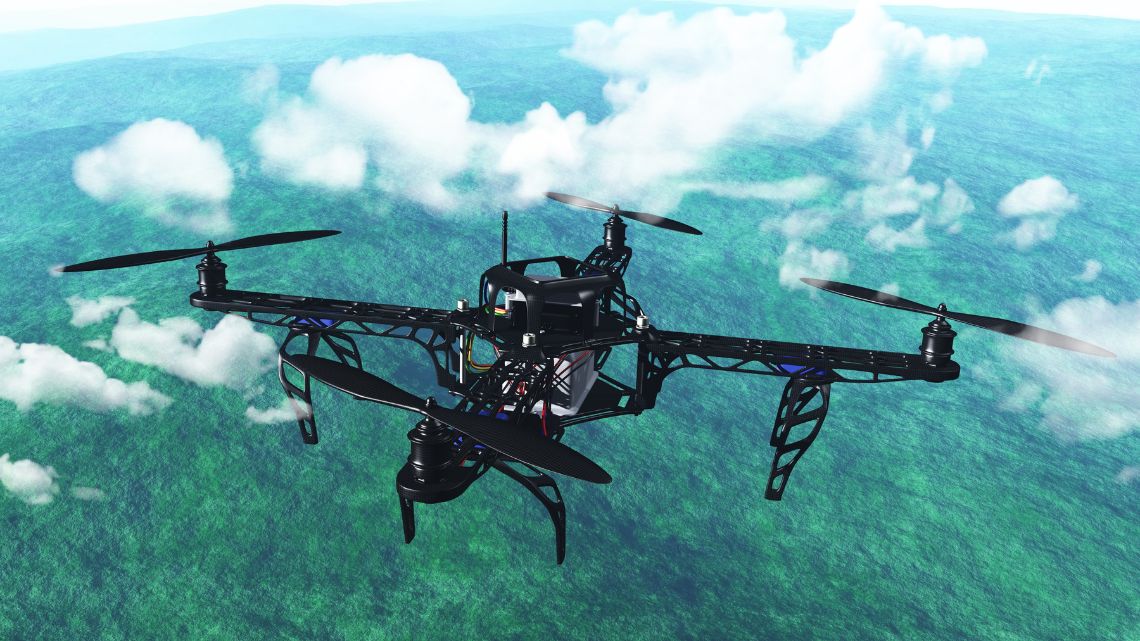
Imagine trying to guard an area the size of a small country—dense forests, coastlines, and mountain valleys, with only a handful of rangers on foot. For most of conservation history, that has been the reality. Poachers moved faster. Habitat degraded quietly. Endangered animals vanished before anyone could count them. By the time a threat was detected, it was sometimes too late. Today, a small flying machine costing less than a decent camera offers a different picture. Unmanned aerial vehicles (drones), the same technology used in military surveillance and package delivery, have quietly become one of the most transformative tools for conserving natural resources.
The Problem Drones Solve: Detecting the Invisible
Wildlife conservation has long faced a fundamental mismatch: the areas that need protection are vast, yet the resources available to protect them are limited. A national park ranger may be responsible for hundreds of square kilometers. Manned aircraft are expensive and logistically demanding. Satellite imagery often lacks the resolution needed to identify individual animals, let alone detect a poacher moving through the undergrowth at night.
By making threats visible rather than dramatic, drones solve the central challenge—enabling conservation teams to intervene in a timely manner.
Drones can fly low to capture fine details, work quietly so they do not disturb wildlife, and cost much less to use than helicopters. With high-resolution cameras, thermal sensors, and reliable artificial intelligence, they give conservationists something new: constant, real-time views across entire landscapes.
In India’s Kaziranga National Park, home to the world’s largest population of one-horned rhinoceroses, forest authorities use drones to monitor vulnerable zones and track illegal movement. The terrain—dense grasslands and marshes—makes ground surveillance difficult. A drone flying overhead can quickly scan large areas and relay information in real time.
The result is simple yet powerful: drones drastically improve awareness and response timing for conservationists.
Stopping Poachers in the Dark
Not all threats are visible in daylight. Not all threats are visible in daylight. Many illegal activities, such as poaching, logging, and encroachment, take place in the darkness of night.
The most urgent application of drone technology in wildlife conservation is anti-poaching.
In Africa, the scale of the problem is staggering. Poachers kill tens of thousands of elephants each year, and rhino horn, which still remains one of the most valuable commodities on the illegal wildlife trade market. Most poaching occurs at night, when rangers are not flying in helicopters or ground patrols are unable to stay vigilant.
This is where thermal imaging has become indispensable.
’Bathawk’ drones, made by the South African company UAV Drone Solutions, now conduct night patrols over national parks in South Africa, Malawi, and Zimbabwe. These drones send live thermal video to ground crews up to 24 kilometers away, who then coordinate with rangers and police in real time. In areas where these drones are used, elephant and rhino poaching has dropped sharply or stopped completely.
The conservation group World Wildlife Fund (WWF) supported the use of drones equipped with thermal cameras in several regions. These cameras detect body heat, enabling rangers to distinguish between animals and humans at night.
Real result: In one reserve where 19 rhinos were previously killed per month, there were zero deaths for six consecutive months after drone patrols began.
In South Africa’s Hluhluwe-iMfolozi Park, anti-poaching teams integrate drone surveillance, AI, and thermal cameras to track and confront armed poachers in total darkness, a mission that was impossible a decade ago.
Finding Animals That Were Lost to Science
Beyond fighting crime, drones are changing how we track species’ populations. Animals once thought to be nearly extinct are now being counted with greater accuracy than ever before.
In the Serengeti National Park, researchers have used drones to map animal populations and migration patterns. Rather than approaching herds, which can alter their natural movement, drones provide a distant, consistent view.
In India, researchers from the Wildlife Institute of India used drones to make a landmark discovery in Gujarat’s Gulf of Kutch. Scientists had long suspected dugongs, large marine mammals related to the manatee, were present based on underwater feeding trails, but lacked photographic evidence. Drones flown over the shallow coastal waters captured the first clear visual confirmation of the animals. A subsequent drone survey in Tamil Nadu’s Palk Bay counted more than 200 healthy dugongs—a figure that transformed understanding of the species’ recovery in Indian waters.
Drone footage captured more than 200 dugongs in India’s first Dugong Conservation Reserve in Tamil Nadu. This data is now helping shape national marine protection policy.
In Namibia, researchers deployed drones paired with AI image analysis to monitor black rhinos in a wildlife reserve without internet connectivity. This demonstrates that the technology works even in the most remote and resource-constrained environments on Earth.
The Technology Inside
What makes modern conservation drones so powerful is not the airframe. It is the sensors they carry and the software that processes the data they collect.
Thermal cameras detect the heat signatures of animals and humans against a cool background. These signals are invisible to the naked eye at night but clearly visible in infrared. Multispectral sensors measure vegetation health, soil moisture, and water quality, providing researchers with a real-time map of habitat conditions. AI-powered image recognition can automatically identify species in drone footage, saving time and enabling large-scale surveys.
This is important because conservation is not just about protecting against threats. It is also about understanding patterns, such as animal movement, habitat change, and the challenges they face over time.
Drones can also be programmed to fly preplanned survey routes, autonomously, following the same path at the same altitude across repeated missions. This produces data that can be compared over time. A single flight then becomes part of a long-term ecological monitoring system, tracking changes in animal populations, vegetation cover, or illegal encroachment year after year.
A Word of Caution: Drones Can Also Harm
Not every drone over a natural reserve is a loyal conservation tool. Unauthorized drone flights pose a real threat to wildlife. In 2024, a drone in California scattered a flock of 64 protected white-tailed kites, fatally injuring two fledglings. In England, a drone was illegally flown over a peregrine falcon nest during hatching season. The same technology that protects wildlife can profoundly disturb it when misused.
This underscores a core systems engineering principle at the heart of UAV conservation work: the drone itself is only as effective as the protocols, regulations, and human judgment that govern its use. Getting the technology right is only half the challenge. The goal is not constant surveillance, but careful, purposeful monitoring.
What This Means for the Engineering Realm
Wildlife conservation drones are not a single invention. They integrate technologies such as autonomous flight control, sensor miniaturization, AI vision models, satellite communications, and real-time data pipelines. Each component has pushed the boundaries of applied engineering.
The Wild Drone project, an international research consortium, published in early 2026, is developing fully autonomous drones that can track individual animals across open, unstructured environments—without human intervention once the mission begins. This represents the frontier where wildlife conservation meets the cutting edge of robotics and machine learning.
For engineers, the challenge is not just building drones that can fly. They must also create systems that operate reliably in extreme heat, dust, humidity, and wind; process data on-site without cloud connectivity; and be affordable for conservation groups with limited budgets. These are the real-world engineering problems that distinguish fieldwork from classroom theory.
A Shift That Is Already Underway
From the savannahs of Zimbabwe to the coastal waters of Tamil Nadu, drones are now patrolling stretches of land and sea that no human ranger could cover alone. They are helping to locate animals that have slipped out of sight, deterring poachers who once operated under the cover of night, and steadily building ecological datasets that will guide conservation decisions for years to come. What began as a technology shaped by surveillance and warfare has been reworked by conservation teams and directed toward a different threat—the quiet, ongoing disappearance of the natural world.
This change does not arrive with fanfare. There are no sudden overhauls or clear turning points. Instead, it is a gradual shift in how information is gathered, understood, and acted upon. A ranger no longer depends solely on what can be seen from the ground. A forest officer no longer has to wait days to piece together what has changed. A conservation team no longer operates with partial awareness.
The sky has become a new vantage point: quiet, watchful, and increasingly essential.
Drones do not replace hard work. They make that work more effective. In a field where timing often decides the outcome, that difference matters more than ever.