
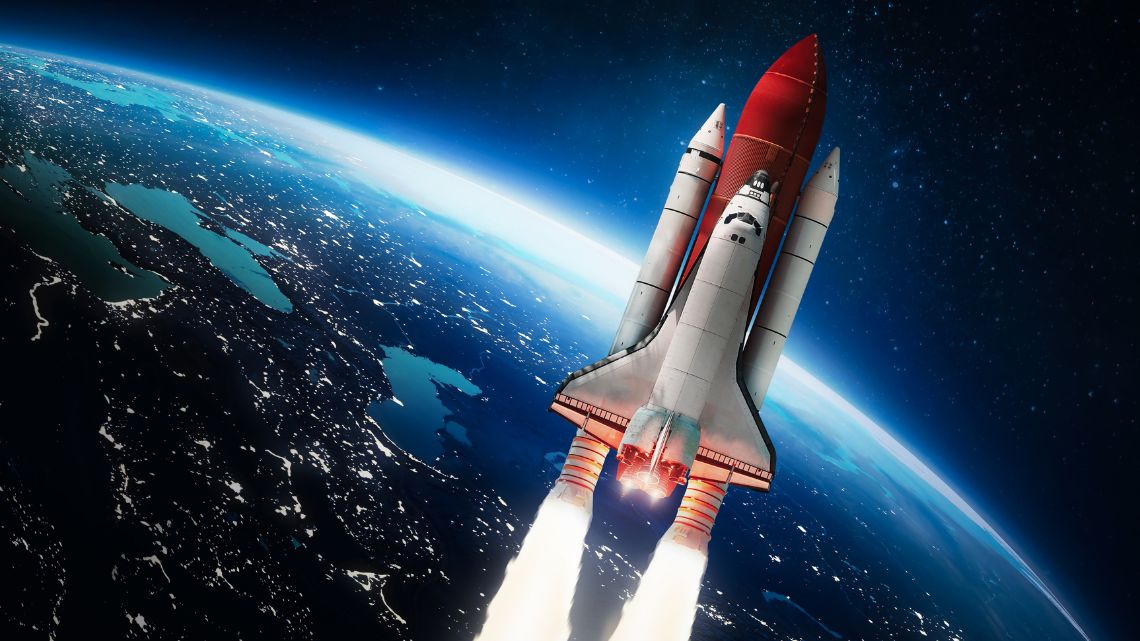
“The moment the rocket touches back down on Earth, still upright and intact, the economics of spaceflight change forever.”
Up until a few years ago, all attempts of previous rocket launches ended in one or more fireballs hurtling into the ocean. But now, they gracefully end on a landing pad in one piece, ready to fly again. For aerospace engineers, this progress marks a turning point as profound as the first successful rocket launch itself. From here on and out, space is no longer a one-way journey for the machines that carry us skyward; instead, it is becoming a cycle of launch, recovery, improvement, and reuse.
From Disposable Giants to Flying Assets
For several decades now, rockets behaved like certain surgical instruments—precise and powerful, yet discarded after a single use. Because investments in anything science-related are costly, every rocket launch required a brand-new vehicle, driving costs into the tens or hundreds of millions of dollars. According to the National Aeronautics and Space Administration, traditional expendable launch systems historically cost anywhere from $100 million to $400 million per mission. Again, this figure depended very much on the mission’s payload and configuration, limiting access only to space, to governments, and a few large corporations.
Then came the reusable rockets, completely changing this equation. According to SpaceX, the Falcon 9 booster (the world’s first reusable, economical, and orbital-class rocket) can fly more than 15 missions after repair, significantly reducing the cost per launch when compared with non-reusable rockets. This innovative success is an engineering breakthrough made from heat-resistant materials, precision guidance, and autonomous landing systems, transforming rockets from consumables into capital assets.
Engineering the Once Impossible Descent
Landing a rocket takes scientific knowledge, brains, and skill; it’s not as simple as reversing a launch. Engineers must solve problems of extreme heat, structural stress, fuel margins, and navigation accuracy—all measured in centimeters. Autonomous guidance systems recalculate descent paths instantly, while the grid fins and cold-gas thrusters steer the booster through hypersonic and supersonic engines.
According to NASA’s Jet Propulsion Laboratory, innovations in reusable propulsion systems depend strongly on lightweight composite materials and regenerative cooling techniques. This allows engines to survive repeated thermal cycles without catastrophic fatigue to machinery. Such changes push aerospace engineering beyond propulsion alone and into systems engineering—where software, materials science, and structural dynamics merge.
Access to Space, Redefined
The impact of reusability reaches far beyond engineering labs today. The Federal Aviation Administration’s 2024 Commercial Space Transportation reports the United States conducted over 100 licensed orbital launches in 2023. It stands as the highest number in its history to date, driven largely by reusable launch vehicles.
At present, cost-effective launches make space for a new market in Earth observation, space tourism, satellite constellations, and in-orbit manufacturing. What once required years of financial planning now fits right into startup budgets and university research funding. Aerospace engineers do not merely design rocket launches or launch vehicles anymore; they design accessibility.
Reusability Becomes a Global Standard
At a launch facility in Florida, USA, a recovery engineer once described the first reused booster landing as “watching a machine earn a second life.” After months of testing and redesign, the booster flew again with almost minimal component replacement. “We first stopped thinking about rockets as disposable, and started thinking about them like aircraft,” the engineer explained. Early planes crashed often and barely flew once, but today, commercial aircraft fly thousands of missions. In 2026, reusable rockets aim for that same reliability curve.
SpaceX may have led the race yesterday and won, but the field is now in international zones. Blue Origin accelerates reusable launch systems for suborbital and orbital missions today. And China and Europe are investing heavily in vertical-landing rocket prototypes. According to the European Space Agency, multi-mission test vehicles began from 2024, conveying that reusability has become a global engineering priority. This competition also drives faster iterative testing and stronger safety standards across the industry.
The Future Now Flies More Than Once
Reusable rockets do much more than save money today. They promote scientific discoveries, enable planetary missions, and make space infrastructure feasible. Each recovered booster represents lessons learned and important data gathered. For aerospace engineers and industry players, space missions are not simply about launching rockets alone; they center on building accurate systems that turn spaceflight into a standard operation rather than a rare event.
However, space travel has not become any cheaper; it has only become achievable. And in that transformation, reusable rockets stand as the clearest proof that aerospace engineering does not ask whether humanity can reach space, but how often, how safely, and how sustainably it can return home to our Earth.