
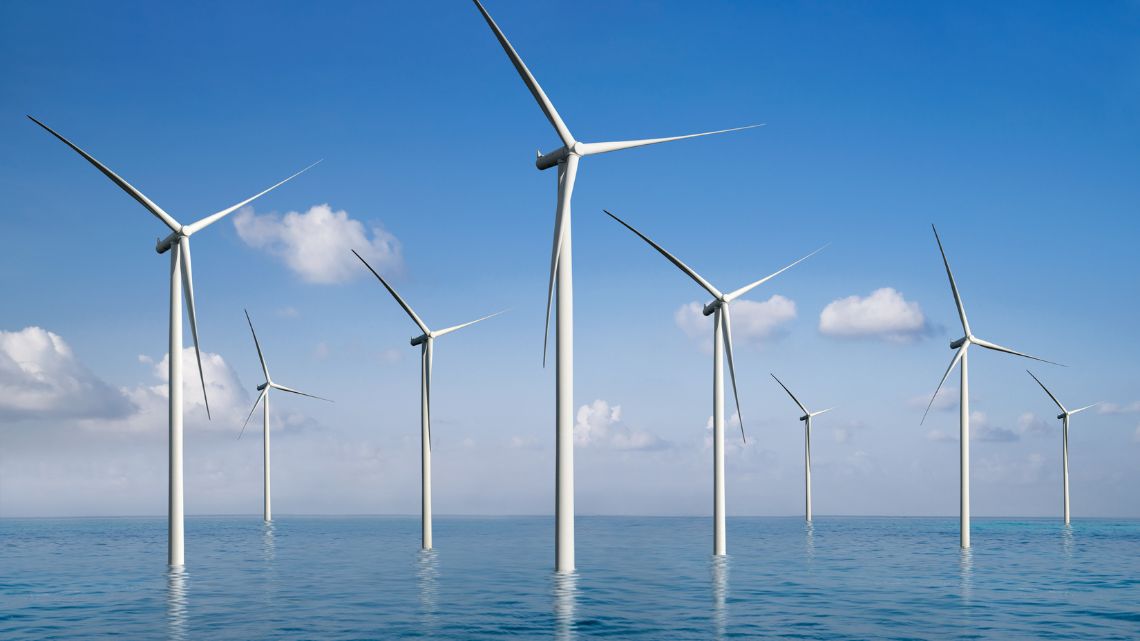
The first ever hint that a power plant stands upright miles away out at sea rarely appears as a building or a chimney-stack. On the contrary, it rises slowly from the horizon as a turning blade taller than most skyscrapers. For engineers, that gigantic rotating silhouette signals something far more extraordinary: the transformation of the open ocean into one of the world’s fastest-growing energy infrastructures.
Not even three complete months into 2026, offshore wind engineering has evolved from experimental projects into a global industry in which mechanical, marine, and electrical systems converge to harness energy from the world’s most reliable winds. This article examines how energy and power engineers design, construct, and operate offshore wind farms, transforming vast stretches of ocean into some of the most ambitious power plants ever engineered.
Why Engineers Took Wind Energy Offshore …
Shortly after engineers first deployed wind turbines on land, they recognized the oceans’ ability for stronger and more consistent wind conditions. This led offshore wind projects to grow instantly over the last 20 years. According to the International Energy Agency (IEA) 2025 reports, global offshore wind capacity reached, give or take, 83 gigawatts, and engineers expect the sector to rise sharply as countries continue to accelerate renewable energy deployment.
Governments across Europe, Asia, and North America now see offshore wind projects as the basis for future power systems. This rapid expansion has also transformed offshore wind from being yesterday’s niche experiment to today’s multi-billion dollar engineering sector that demands expertise across several disciplines.
The Giant Machines Harvesting Ocean Winds
Up until now, modern offshore turbines rank as one of the largest rotating machines ever built by man. Engineers design turbines with a capacity of more than 14 megawatts and with blades stretching over 100 meters in length. Here, a single turbine can power thousands of homes alone. The Global Wind Energy Council (GWEC) reports reveal offshore wind installations growing steadily in scale as developers seek better efficiency and stronger energy output with each project.
In actuality, it’s natural that larger turbines will allow engineers to generate more electricity while reducing the number of structures required across a wind farm. Yet building such enormous machines is no small matter, and even presents unique engineering challenges post-installation. Offshore turbines are fantastic machines that survive the oceanic winds, saltwater corrosion, and the brute strength of the sea. Therefore, engineers design turbine parts using corrosion-resistant coatings, specialized alloys, and reinforced structural systems.
Building the Foundations …
While turbine blades capture attention above the waterline, the true engineering strength occurs below it. Offshore wind farms rest solely on their massive foundations anchored deep into the seabed. It is also why engineers primarily use monopile foundations, giant steel cylinders driven into the seabed to support large turbine towers. In waters at even greater depth, engineers turn to jacket structures or floating platforms that stabilize turbines through advanced anchoring systems.
Today, floating wind platforms have become a recent frontier in offshore engineering. These structures allow turbines to operate in waters that are too deep for fixed foundations, opening vast new regions of the ocean for energy production. The International Renewable Energy Agency (IRENA) states that floating offshore wind platforms could easily increase global wind capacity by simply installing them in deeper coastal waters.
Moving Electricity Across the Ocean Floor
But generating electricity offshore is just one side of the coin. Engineers must also efficiently deliver the energy back to land. Subsea power cables carry electricity from turbines to offshore substations, where engineers convert and stabilize the electrical output before transmitting it to coastal grids. These cables defy constant mechanical stress from waves and seabed movement while maintaining consistent power flow across long distances.
Furthermore, it is also where electrical engineers come into the picture, designing high-voltage transmission systems capable of moving enormous quantities of electricity across the ocean floor with minimal energy loss.
The Teams Designing Open-Ocean Power Plants
Behind every offshore turbine stands an engineering team coordinating the web of structural design, electrical infrastructure, marine logistics, and environmental protection. While civil engineers stabilize foundations, mechanical engineers improve turbine efficiency, and power engineers include offshore electricity into national grids.
Many engineers working on offshore wind projects describe their work as highly rigorous, but credit the feeling and value that goes into building “power plants without walls,” where wind, water, and engineering precision all align perfectly.
The Next Chapter of Global Wind Power
Today, offshore wind energy grows as countries aim for cleaner power and greater energy independence. Engineers now push further, exploring floating wind farms, larger turbines, and better grid connections that will lead the way for future offshore energy projects.
The ocean has always powered ships and shaped continents. Through the hard work of our top engineers around the world, the energy and power engineering sector will increasingly power cities as well.