
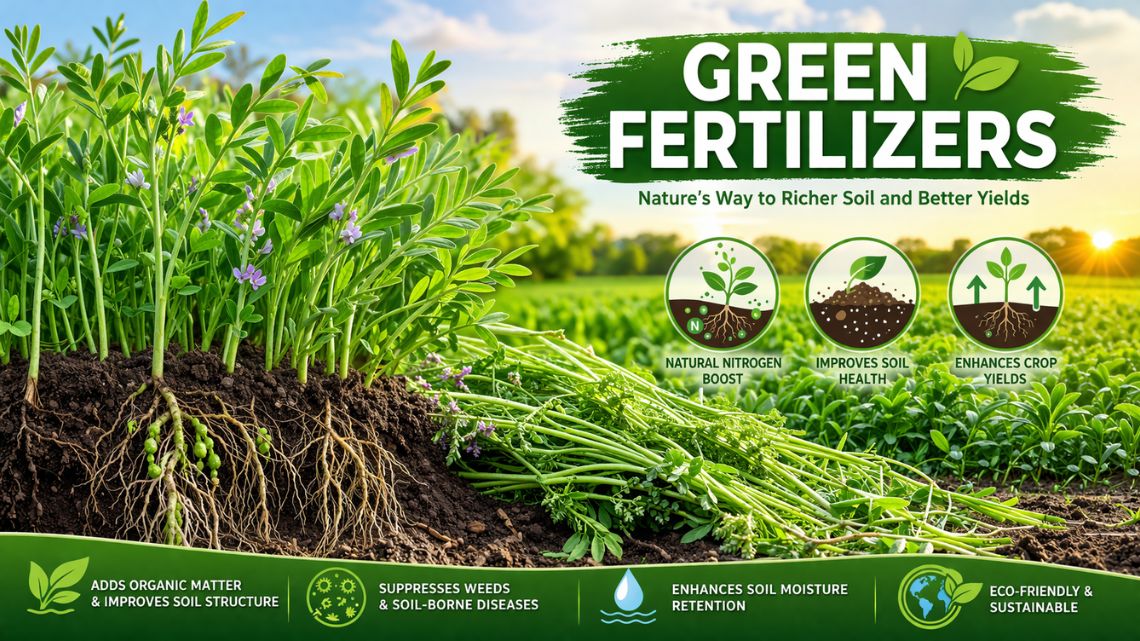
The soil that grows food and feeds humanity is both ancient and vulnerable, and the engineers who operate at the intersection of chemistry and agriculture are acutely aware of this. As the rhythmic thrumming of fertilizer plants rumble over vast stretches of farmland, chemical engineers wrestle with a growing problem: how to keep fields fertile for 8.3 billion people while reducing emissions and environmental damage tied to fertilizer production. For the last few years, people have faced a very demanding engineering problem of our time: feeding a growing population in a climate-smart way.
Feeding the World At a Cost
For most part of the 20th century, synthetic fertilizers—especially the nitrogen-based ones—set off a sharp spike in crop yields and global food production. The Haber-Bosch process, which produces ammonia from nitrogen and hydrogen, fostered what modern-day agriculture is. Additionally, this process helped propel the world’s population from around 1.6 billion in 1900 to over 8.3 billion people today.
However, this success came at a dire cost. The traditional process for producing ammonia—the key chemical compound of most nitrogen fertilizers—relies heavily on fossil fuels. The ammonia produced consumes around 3–5% of the world’s natural gas supply, and also contributes substantial greenhouse gas emissions during synthesis.
Meanwhile, more than half of the applied nutrients added to the soil are never absorbed by crops. According to the International Fertilizer Organization, the nutrients either leach into the water systems or drive nitrous oxide emissions—a greenhouse gas over 300 times more potent than CO₂. Today, chemical engineers stand at the center of reshaping this industry, solving fertilizer production and nutrient delivery problems while feeding a growing world.
Reinventing Ammonia Production
At its heart, sustainable fertilizer engineering has two goals: first, reduce emissions during production and second, improve nutrient uptake in the fields. Chemical engineers found low-carbon ammonia production, often called “green ammonia,” to be a sustainable alternative to traditional fossil fuel-based production, which utilizes renewable energy-powered electrolysis to generate hydrogen. According to analysis in Nature Food, sustainable pathways such as electrolytic ammonia can cut ammonia production emissions drastically—with carbon capture technologies reducing overall emissions by as much as 70%, even when still using natural gas.
These methods that reinvent fertilizers for efficiency and sustainability are costly and energy-hungry. All the same, they offer a clear route to separating food production from fossil fuel dependence—a key tenet of eco-friendly farming. There are also other innovations for sustainable agriculture, namely enhanced-efficiency fertilizers (EEFs), where these formulations release nutrients slowly to match plant needs more closely and foster cleaner air and water. Studies by Science Direct show that slow-release formulations help sync nutrient availability with plant uptake, lowering both environmental pollution and the frequency of fertilizer application without compromising the yield.
Chemical engineers also run tests for various homegrown production methods today. Recent additions of biorefineries convert biomass waste and/or animal manure into nutrient-dense fertilizers, which reduces the reliance on fossil-based raw materials and monetizes agricultural leftovers. Sedron Technologies is one such company that produces carbon-negative ammonia and phosphorus-rich solids from dairy manure to recycle organic materials for soil enrichment and climate mitigation.
When Chemistry Meets Farm Economics…
Improving nutrient uptake on farms is as critical as cutting industrial emissions. Smart farming technologies reduce the burden of farmers in three essential ways: deliver fertilizers at the right time, minimize environmental leakage, and maximize crop uptake. An increasing amount of research highlights the role of biological solutions, using nitrogen-fixing bacteria that naturally enrich the soil. According to the Washington Post, Brazil has adopted around 85% of biofertilizers in soybean coverage, saving the farmers a substantial $25 billion annually while slashing emissions to a degree that matches removing millions of cars from the road.
For chemical engineers, these strategies put together offer paired benefits: they improve nutrient efficiency as well as reduces the environmental impact of fertilizers. Even so, challenges continue to persist. Green ammonia production often requires more energy transition financing than the traditional routes, and decentralized production is always in-demand for new supply chain frameworks. For these reasons alone, engineers and policymakers join forces to reduce costs, create mutual benefits, and ensure that innovations continue to scale sustainably.
The Future Grows Here
Today, chemical engineers are uniquely placed to head the transformation of fertilizer production across countries. They work to streamline catalytic processes, integrate robust renewable energy systems, and design efficient fertilizer techniques that match biological cycles.
In 2026, we can confidently assume sustainable fertilizers are more than just a technical challenge; together, they constitute aspects of engineering innovation, food security, and environmental stewardship. While the fields of tomorrow yield in abundance, the credit will belong to the visionaries who redesign agriculture and to the farmers who toil long hours in their fields—all with an aim to think big, go green, and live clean.