
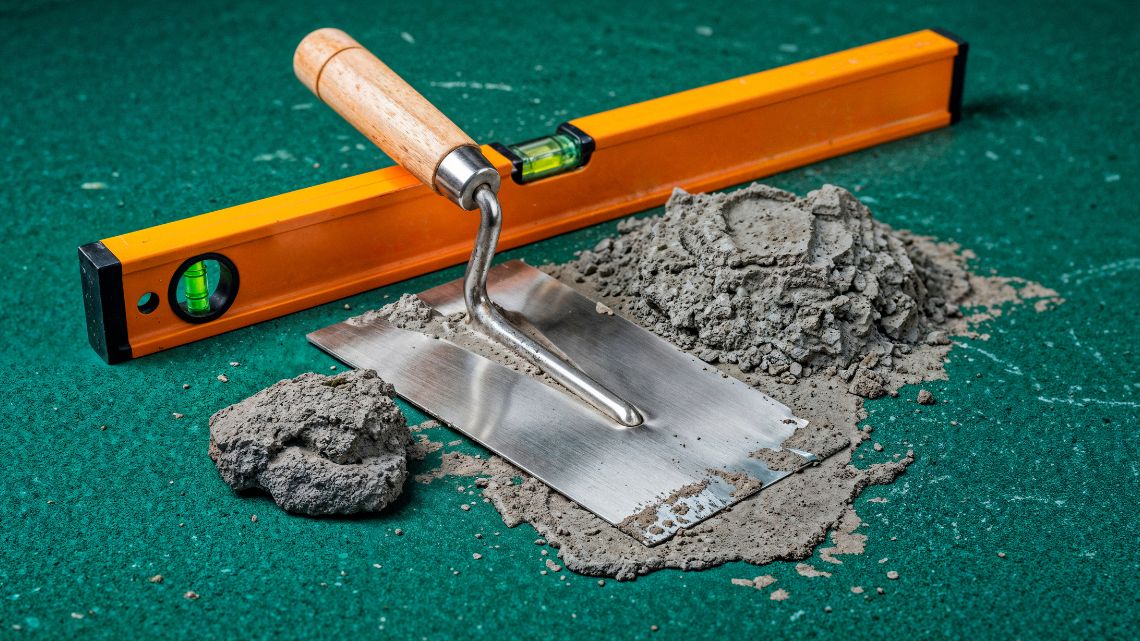
Concrete has always been the silent backbone of modern civilization. It holds up skyscrapers, bridges continents, and shapes city skylines. But what if it could do more than just bear loads? What if the very walls around us could store energy, recharge themselves, and power the buildings they support? That future is no longer farfetched; it is being engineered into reality. Researchers at Aarhus University in Denmark have created what they call “living cement” infused with living bacteria that can store electricity, recharge itself, and potentially turn every building into its own power station. In simple terms, they have transformed cement, one of humanity’s oldest and most widely used materials into a functional supercapacitor capable of storing and releasing electricity.
How It Works: The Science behind the Material
The breakthrough centers on Shewanella oneidensis, a species of electroactive bacteria known for its rare ability to move electrons outside its own cell membrane. This mechanism called extracellular electron transfer (EET) allows the microorganism to “breathe” minerals in oxygen-poor environments by transferring electrons to external surfaces. Lead researcher Qi Luo and her team at Aarhus University figured out how to embed these living organisms directly into a cement matrix without compromising the material’s structural integrity.
Because ordinary cement is extremely alkaline and hostile to life, they modified the matrix to create protected micro-environments where Shewanella oneidensis could survive without weakening the material’s structural properties. The bacteria are housed in engineered pockets within the cement and connected to a microfluidic network of tiny channels that supply nutrients when needed. This system keeps the microorganisms viable and supports their electron-transfer activity, enabling the composite to exhibit measurable energy storage behavior under laboratory conditions.
A Recoverable Energy System
The most jaw-dropping feature of this living cement isn’t just that it stores electricity but it can even regenerate its energy-storing capacity when nutrients are reintroduced. Traditional lithium-ion batteries degrade over time. After hundreds of charge-discharge cycles, their capacity fades and they eventually turn into waste, a growing environmental headache given how many billions of devices rely on them. Living cement operates on an entirely different principle. When the bacteria inside begin to lose energy capacity, they can be “fed” nutrients through a microfluidic system embedded in the material itself, essentially tiny channels running through the cement, like a circulatory system. With this method, up to 80% of the original energy capacity can be recovered. That means buildings could store and reuse power over time without swapping out batteries or paying for constant repairs. The researchers even stress-tested the material under challenging conditions like freezing cold and scorching heat, and it kept storing and releasing electricity. In early demonstrations, just six of these living cement blocks wired together and they generated enough power to light up a small LED light.
Engineering Challenges Ahead
Although the research is promising, several practical challenges must be addressed before living cement could move beyond the laboratory. The first concern is scalability. Producing controlled test samples is very different from casting large structural elements on-site. Engineers will need to ensure the microbial networks are evenly distributed throughout large pours without compromising its strength or durability.
Long-term performance is another critical question. Structural materials are expected to last decades under variable temperatures, moisture fluctuations, freeze–thaw cycles, and chemical exposure. The biological components must survive these stresses without degrading or losing their energy-storage function.
Regulations and standards add another layer of complexity. Existing building codes and material standards are not designed to assess structural composites that exhibit electrochemical behavior or contain living organisms. New evaluation methods would likely be required to measure both mechanical integrity and electrical performance over time.
There are also questions about maintenance. If the biological component requires occasional reactivation, how will that be managed in occupied buildings? Can the bacteria remain viable in sealed, dry environments over extended periods?
Those uncertainties sit right at the edge of the excitement. Construction engineering is a conservative discipline for good reason; safety and longevity are paramount. So, any material innovation must meet rigorous benchmarks before adoption.
A Sustainable Alternative
Traditional cement production is responsible for roughly 7–8% of global CO₂ emissions, making it one of the most carbon-intensive materials in widespread use. Living cement does not eliminate those manufacturing emissions. However, by embedding energy-storage capacity into structural elements, it raises the possibility that built structures could contribute to a building’s energy use over time. If future developments enable this at scale, even a modest offset of operational energy could gradually help balance part of cement’s upfront carbon footprint over the lifespan of a structure.
Of course, nothing comes entirely footprint-free. The bacteria require nutrients but these are simple organic compounds rather than rare earth metals or exotic chemicals and these would need to be supplied periodically. Water is also necessary to circulate nutrients through the microfluidic channels. In water-stressed regions, that consideration alone would demand careful planning. Whether the environmental balance ultimately proves favorable will depend on scale, durability, and long-term performance. If living cement can deliver reliable energy storage over decades, the trade-off could prove worthwhile.
What This Could Mean For Future Cities?
Living cement could prove especially transformative in regions where electricity is unreliable, expensive, or difficult to distribute. Remote villages far from centralized grids might construct homes that generate and store part of their own power. Rapidly growing cities could integrate living foundations and structural elements to ease pressure on ageing infrastructure. Even in disaster-prone areas, buildings with embedded storage could keep critical systems running when external networks fail.
But the technology is still in its early stages, and there are still some questions that need to be answered: How much energy can buildings realistically generate at scale? How long can the bacteria remain active under extreme heat, cold, or humidity? And what will large-scale production cost? These are complex challenges, and they deserve rigorous evaluation.
Final Word
The planet urgently needs alternatives to combustion-based energy. If our walls can help carry the load even a little that’s a win worth exploring. Imagine bridges that power their own sensors, homes that store rooftop solar directly inside their walls and structures that quietly support the grid instead of draining it. Unlike conventional batteries, which rely on expensive, rare materials like lithium and cobalt and degrade over time, living cement offers a sustainable, self-healing, and endlessly rechargeable solution. Though still at the proof-of-concept stage, the research opens a new chapter in building technology. We have spent centuries making buildings stronger, taller, faster to construct. Perhaps it is time to make them useful in an entirely new way.