
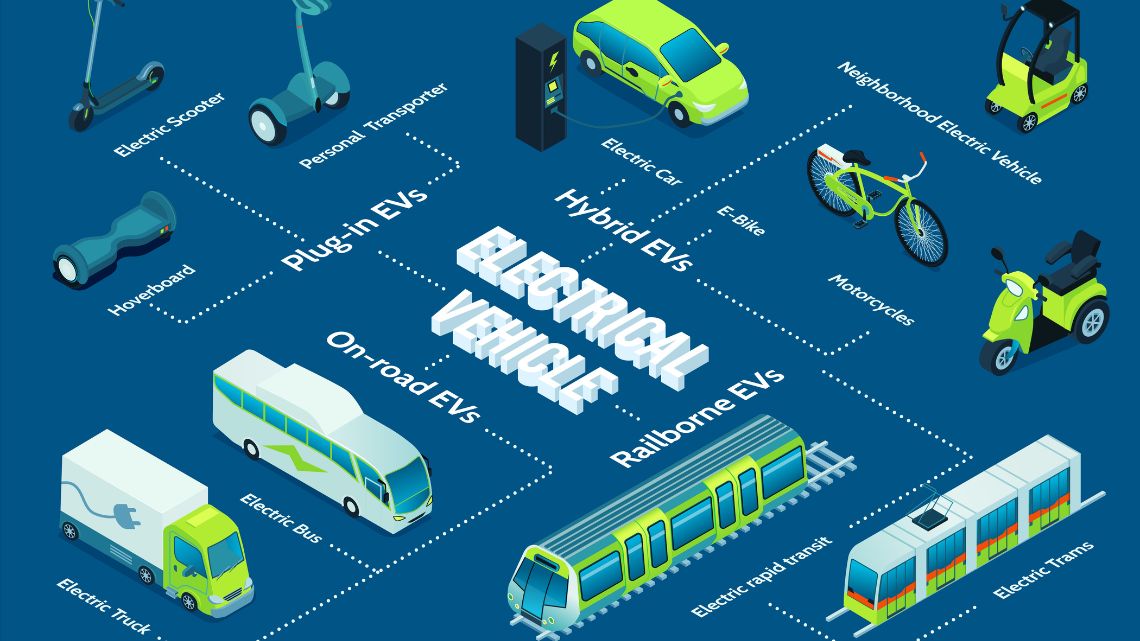
The future of mobility no longer arrives with a kick that awakens a roaring motor; it arrives quietly—clean and electric. No more engine revs, no smoky exhaust trails, no familiar rhythm of combustion. Although there is a timeless, vintage beauty to it even today, the move toward electric transport is the new standard.
But behind the silence of every electric vehicle is the hum of transformers, the surge of power lines, and the unspoken arrangement of systems that is built to keep millions of vehicles moving. In 2026, the story of EVs is about the infrastructure that is quietly rising beneath them.
A Future That Arrived Too Early For Its Own Systems …
The adoption of EVs today has accelerated at a pace hardly any imagined. The EV Sales Statistics 2025 observes global EV sales hitting 18.5 million units in 2025, with numbers only rising into 2026.
Even so, the infrastructure did not evolve at the same pace. Our engineers suddenly found themselves outpaced by a future that had already arrived. And unlike fuel stations, EV charging is a deeply connected, multi-system service and not an isolated infrastructure.
Designing Energy on Demand
Here’s a case in point: the need for rapid, efficient fueling—similar to a two-minute gas stop—has not gone away; in fact, it has simply evolved for the modern era. Engineers design high-power DC fast chargers that deliver hundreds of kilowatts, narrowing the charging time from hours to minutes. But by doing so, fast charging comes with consequences: systems demand heavy-duty grid connections, advanced cooling mechanisms, and power electronics that operate under extreme loads. Setting up a charging station requires a rather significant logistical and engineering effort.
The International Renewable Energy Agency (IRENA) suggests that coordinating charging station installation with grid modernization is essential to prevent, according to the report, infrastructure-related issues. Today, engineers no longer design isolated charging points; they design interconnected networks—urban hubs, highway corridors, and fleet depots—that function as integrated energy ecosystems.
Every Electric Vehicle Tells a Much Bigger Story …
You see, every time an electric vehicle plugs in and charges, it pulls a thread connected to a massive energy ecosystem. Now, multiply the number of vehicles charging—at the same time—by thousands, and the strain becomes very visible. Engineers anticipate such patterns and design smart charging systems that automatically balance loads by shifting, reducing, or optimizing charging times to match grid capacity. Once operated as a one-way system, modern grids now listen, learn, adapt, and respond.
Engineering Convenience into Energy
Today, metropolises require dense, accessible, and user-friendly charging solutions—especially when space is limited, demand is high, and convenience is non-negotiable. To tackle this unique engineering challenge, engineers incorporate charging infrastructure into everyday life, like in office basements, parking lots, residential complexes, and even on sidewalks.
But it is here that engineers face a complex, fourfold challenge: technical, spatial, behavioural, and economic. Wireless charging experiments emerge, curbside solutions evolve, and yet every design must answer this question: “How do you make charging feel effortless in a city that never slows down?” Engineers balance convenience, cost, and scalability—three variables that rarely align easily in crowded cities.
Places Where the Grid Has Yet to Catch Up
Despite its rapid progress, some parts of the world—like rural and remote regions—still lack adequate charging infrastructure. In such places, engineers face problems regarding weak grid connectivity, high installation costs, and difficult terrains. And not to mention the slow adoption due to social and economic factors. Some communities still resist the acceptance of EVs, or lack awareness, or prioritize immediate affordability over long-term sustainability. And so engineers believe that infrastructure must always work for both people and systems.
All things considered, the need for electrification is still key in 2026. EV integration reduces emissions, decreases reliance on fossil fuels, and fosters lasting ecological sustainability. The challenge now is how to build inclusively, making sure that systems reach disadvantaged regions.
The Roads Run on Networks Now
Electric vehicles highlight a real transformation that lies in the systems that support them. Charging networks do more than simply power up cars and bikes; they redefine how energy flows through entire systems: cities, highways, and economies.
In 2026, there is one question that is yet to be answered: “The EV demand is here—so can the infrastructure keep up?” Because in that race, the future of transportation will not be defined by the vehicles we drive, but by the networks we build to keep them moving.