
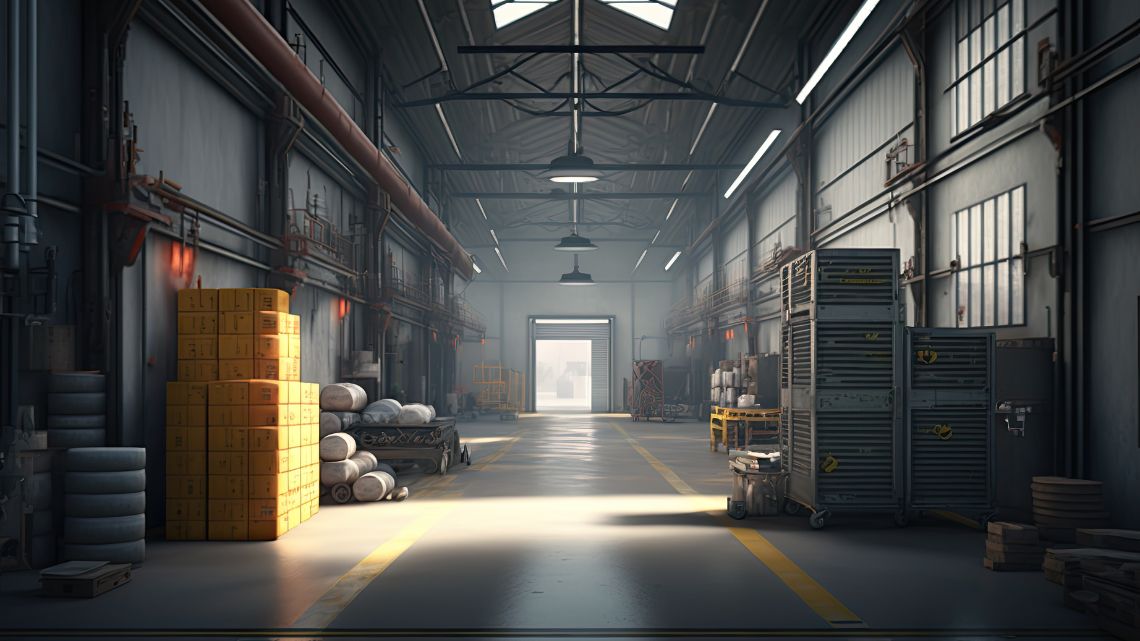
In the world of Industrial Engineering (IE), the ultimate goal used to be a factory floor full of people moving in perfect, time-studied sync. But for the modern IE entrepreneur, the goal has shifted to something a bit more… eerie. We’re talking about the Dark Warehouse—a facility so automated it doesn’t even need the lights turned on.
If the Chemical Engineers are busy brewing dinosaur-free soup, the Industrial Engineers are busy building ‘Physical Internets’ where robots do the heavy lifting and AI does the thinking. For a business owner, this isn’t just about cool robots; it’s about a ‘hands-off’ ROI that works while you sleep.
1. The ‘Orchestra’ Without a Conductor
Traditional IE was primarily focused on ergonomics and assembly lines. Modern IE is about System Integration. Think of a warehouse as a giant, high-stakes game of Tetris played in 3D, at 20 miles per hour, by robots that never need a coffee break.
- AMRs (Autonomous Mobile Robots): Unlike the old-school ‘Roomba’ style machines that follow a magnetic strip on the floor, modern AMRs utilise LiDAR and computer vision. They’re basically self-driving Teslas for your pallet racks.
- Swarm Intelligence: Companies like Ocado have built ‘hives’ where hundreds of robots zip around on a grid, passing within millimeters of each other to pick your grocery order in minutes. It’s chaotic, beautiful, and terrifyingly efficient.
2. Digital Twins: The ‘Save Game’ for Your Factory
One of the biggest risks for an engineering entrepreneur is building a multi-million dollar facility only to realize the forklift paths are too narrow or the conveyor belt is a bottleneck. In the old days, you just found out the hard way. Today, we use Digital Twins.
A Digital Twin isn’t just a 3D model; it’s a living, breathing virtual replica of your entire operation fed by real-time data.
- The ‘What-If’ Machine: Want to see what happens if your supplier is three days late or if you double your order volume? Just run the simulation.
- Predictive Maintenance: Instead of waiting for a motor to explode and shut down your line, the Digital Twin notices a weird vibration pattern and tells you to fix it before the disaster. It’s like having a psychic on your payroll, but with better math.
3. The ‘Last Mile’ Nightmare
For any entrepreneur in the e-commerce or logistics space, the ‘Last Mile’—the journey from the local hub to the customer’s door—is the most expensive part of the business. It’s where IE meets the ‘Real World’ (which is full of traffic, rain, and confusing apartment doorbells).
Industrial Engineers are now disrupting this space with:
- Micro-Fulfillment Centers (MFCs): Tiny, hyper-automated warehouses tucked into the back of grocery stores or urban basements.
- Route Optimization AI: It’s not just Google Maps. It’s algorithms that calculate 10,000 different variables—weather, fuel prices, driver fatigue, and delivery windows—to save three cents per package. If you’re shipping a million packages, those three cents just bought you a private island.
4. Why the ‘Lights Out’ Model is a Business Moat
Why are VCs pouring billions into automation? Because labor is volatile, but code is scalable.
- Space Optimization: Robots don’t need wide aisles, lunchrooms, or oxygen. You can pack three times as much inventory into the same square footage. In the world of high-priced urban real estate, that’s a massive win.
- Precision over Speed: Humans make mistakes when they’re tired. Robots don’t. A 99.9% accuracy rate versus a 95% accuracy rate might not sound like much, but it’s the difference between a happy customer and a ‘refund nightmare’ that kills your margins.
- The “Elastic” Warehouse: During peak seasons (like Black Friday), you can’t just hire 500 qualified people overnight. But you can rent more robots or turn up the speed on your automated sorters.
5. The ‘Human’ Problem: IE with a Soul
Here’s the plot twist: as we move toward ‘Dark Warehouses,’ the role of the Industrial Engineer actually becomes more human-centric. Someone has to design the interface between the robots and the remaining humans.
The best IE entrepreneurs are focusing on Cobots (Collaborative Robots). These are machines designed to work with people, taking over the ‘Dull, Dirty, and Dangerous’ jobs so the humans can focus on high-level problem solving and exceptions. It’s about upgrading your staff from ‘movers’ to ‘fleet managers.’
6. Conclusion: Don’t Get Left in the Light
The transition to autonomous industrial systems is the “Great Filter” for modern engineering firms. The companies that embrace the “Dark Warehouse” model—with its Digital Twins, swarm robots, and AI logic—will operate at costs that traditional firms simply can’t match.
For the entrepreneur, the message is clear: if your warehouse still has the lights on and people running around with clipboards, you’re not just old-fashioned—you’re vulnerable. The future of IE isn’t about working harder; it’s about building systems that are smart enough to work without us.
So, dim the lights. The robots have it from here.