
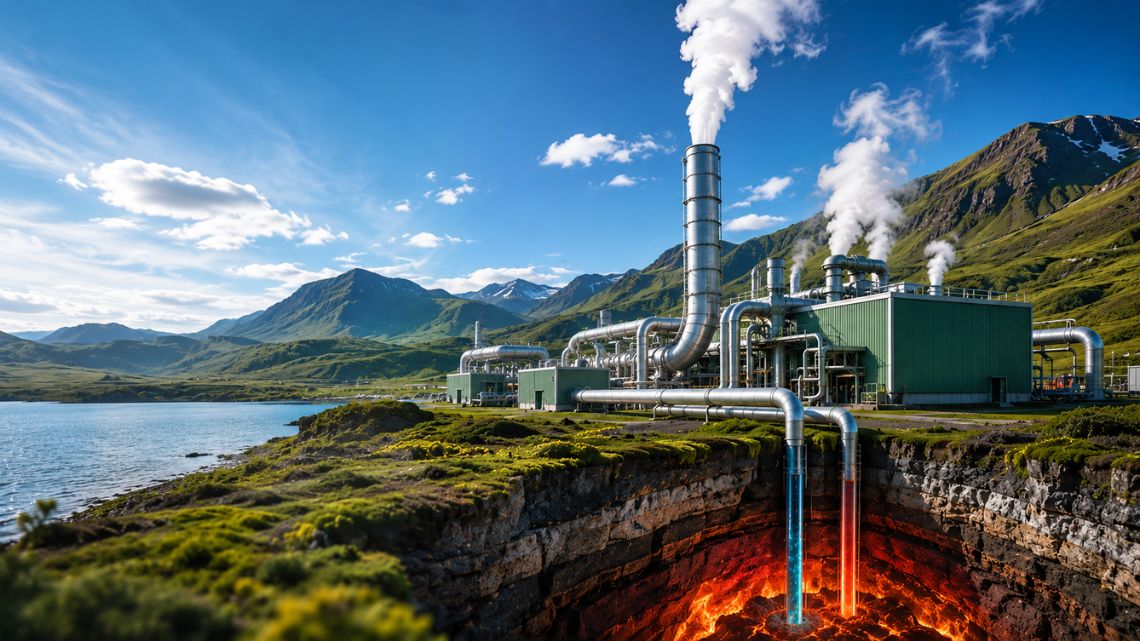
All this while, humanity searched outward for energy. We chased wild currents, braved the howling winds of lofty mountains, and carved into the ocean’s depths for oil buried millennia ago. The entire time, an unassuming, invisible energy slumbered beneath our very footstep, waiting patiently for us to notice.
As is commonly understood, the Earth has never stopped producing heat. Deep within our planet, a primordial furnace burned long before humans learned to make fire from striking two stones. It was just that our ancestors lacked the tools to dig deep enough for it. But today, that story is changing.
In 2026, one of the most fascinating transformations in energy and power engineering is unfolding several kilometers beneath the Earth’s surface. Around the world, engineers are developing stronger drilling systems, advanced geothermal technologies, and designing deeper wells capable of unlocking a renewable energy source that neither depends on sunshine nor waits for the wind to blow. Instead of asking what the weather will do tomorrow, geothermal engineering asks a far simpler question: “How much energy has been waiting beneath us all along?” Let’s get into it.
The Renewable Energy That Never Takes a Break
Renewable technology is like the mythical Hydra: solving one problem creates one more. For example, solar power fades at night, wind turbines stall on calm days, and hydropower depends on rainfall and reservoirs. However, geothermal energy offers a reliable alternative.
The International Energy Agency highlights geothermal facilities as highly dependable clean energy sources, operating continuously with capacity factors that outperform many other renewables. Unlike solar and wind power, geothermal systems continuously extract naturally stored underground heat. The push for renewable energy makes the consistency of stable electrical grids increasingly valuable to power engineers today.
Going Where Energy Has Always Lived
Early geothermal plants required pre-existing underground reservoirs of hot water and permeable rock. Because of these specific needs, development was limited to volcanic regions, including Iceland, New Zealand, Indonesia, Kenya, and parts of the American West.
Only because engineers refuse to be constrained by geography, Enhanced Geothermal Systems are revolutionizing today’s energy landscape. Bypassing the need for ideal natural conditions, they drill deep into dry bedrock, fracture the rock artificially, circulate water to absorb the Earth’s intense heat, and harness the sulting fluid to produce power.
As per the U.S Department of Energy’s Enhanced Geothermal Shot™ initiative, ongoing engineering advances aim to dramatically reduce the cost of enhanced geothermal energy over the coming decades, making deployment possible across far more regions than conventional geothermal resources allow. The challenge has shifted from ‘finding’ geothermal energy to ‘engineering’ access to it.
Materials Built for the Deep
The deep subsurface is one of engineering’s harshest frontiers. With temperatures routinely topping 200℃ and crushing pressures, drilling tools are now designed to endure weeks or months of continuous grinding against abrasive rock.
Engineers now adapt oil and gas techniques—like stronger drill bits, advanced well casings, and precise directional drilling—to overcome these harsh conditions. And to further add, monitoring systems stream continuous well data to engineers, enabling engineers to maximize drilling efficiency and minimize operational risks. Modern geothermal engineering has become as much a triumph of materials science and data analytics as it is of drilling itself.
Reliable Energy for an Electric Future
As transportation, manufacturing, and cities continue electrifying, stable electricity has become just as important as clean electricity. The International Renewable Energy Agency states that dispatchable renewable energy sources like geothermal are very important in supporting reliable, low-emission power systems alongside solar and wind generation.
Several countries are now moving beyond generating electricity from geothermal energy. By pairing this power generation with greenhouse farming, district heating, and lithium extraction, engineers are turning a single heat source beneath our feet into a multi-industry engineering platform.
Rediscovering the Planet’s Power
Perhaps the greatest lesson geothermal engineering teaches is not about drilling deeper; it is about thinking differently. For several years, humanity searched across oceans, deserts, and continents for new energy reserves while one of the planet’s oldest energy sources quietly remained beneath our feet.
In 2026, geothermal engineering is transforming that forgotten resource into dependable power through deeper drilling, smarter reservoir engineering, and increasingly sophisticated underground technologies. The Earth has been generating heat every second of every day for billions of years, and today’s engineers are simply learning how to listen to it. And maybe, just maybe, the next great renewable-energy revolution will not rise toward the sky at all—but descend into the remarkable world beneath it.