
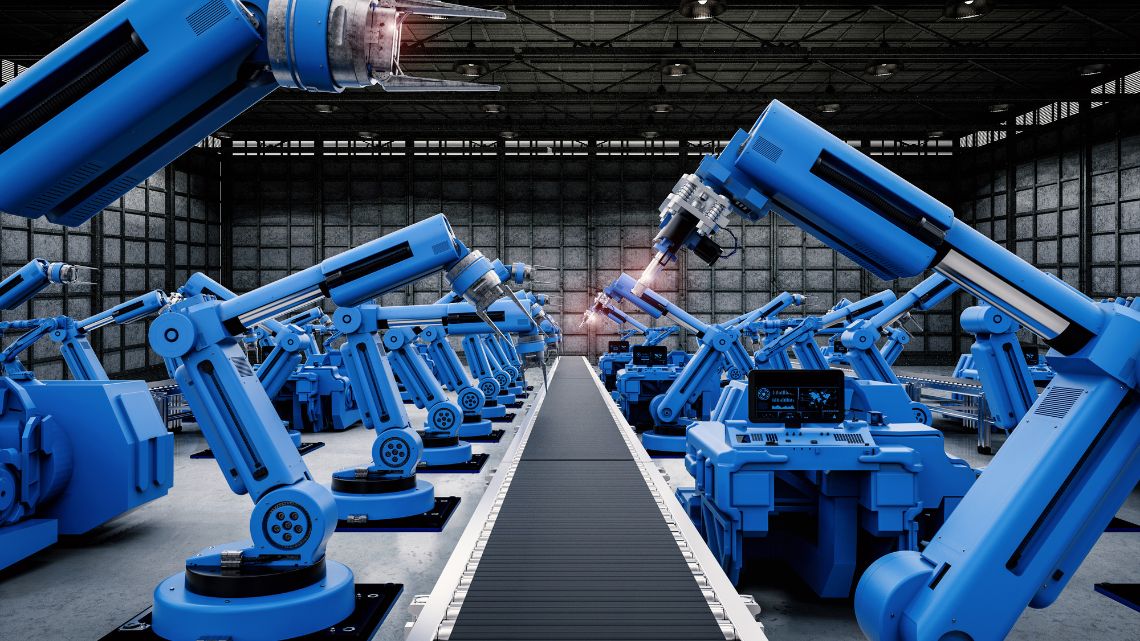
Automation has become a defining feature of modern engineering systems. From industrial manufacturing and power grids to transportation networks and data infrastructure, automated control systems now manage processes that were once dependent on continuous human oversight. These systems are designed to improve efficiency, reduce variability, and respond faster than manual intervention ever could.
However, as automation becomes more capable, a subtle but significant shift is occurring. Control is increasingly perceived as absolute, precise, predictable, and reliable under all conditions. In practice, this perception does not always align with how automated systems behave in complex, real-world environments. The result is an emerging engineering challenge: the illusion of control.
Automation Extends Capability, Not Certainty
Automated systems are built on models, rules, and data-driven logic. These models represent expected system behavior under defined conditions. When operating within those conditions, automation performs with high consistency and speed.
The limitation arises when systems encounter situations that fall outside their design assumptions. Variations in input data, unexpected interactions between subsystems, or changes in operating conditions can produce outcomes that are difficult to predict. Automation does not eliminate uncertainty; it operates within a structured framework for interpreting it. This distinction is critical. Engineers often assume that increasing automation reduces system variability. In reality, it shifts variability from visible manual processes to less visible system interactions.
Loss of Visibility Into System Behavior
One of the key consequences of advanced automation is reduced transparency. As systems become more complex, their internal decision-making processes become increasingly difficult to interpret in real-time.
Operators no longer interact directly with physical processes. Instead, they interact with interfaces that represent system states through aggregated data. This abstraction improves usability but reduces direct insight into underlying behavior. When systems operate normally, this abstraction is efficient. When conditions deviate, it can delay recognition of emerging issues. Engineers and operators may not immediately understand why a system is behaving in a certain way, even if all individual components are functioning correctly. The system appears controlled, but its internal dynamics are not fully visible.
Over-Reliance on Stable Conditions
Automated systems are often optimized for steady-state operation. Control algorithms, optimization routines, and scheduling systems are designed to perform efficiently under predictable conditions.
In real-world environments, conditions are rarely stable. Demand fluctuates, inputs vary, and external factors introduce disturbances. When systems are tightly optimized, their ability to absorb these disturbances can be reduced. This creates a form of fragility. Systems perform exceptionally well under expected conditions but respond poorly to unexpected changes. The illusion of control persists until variability exceeds the system’s tolerance.
Human Intervention Becomes More Difficult
As automation increases, human involvement typically shifts from active control to supervisory oversight. Operators intervene less frequently, but when they do, the required response is more complex.
In highly automated systems, transitions from automated to manual control are critical moments. These transitions often occur under non-ideal conditions—during system stress, failure, or instability. At this point, operators must quickly understand system state, diagnose the issue, and take corrective action.
However, reduced day-to-day interaction with system processes can limit familiarity. Interfaces may not provide sufficient context for rapid decision-making. As a result, intervention becomes more difficult precisely when it is most needed. Engineering design must therefore account not only for automated performance, but for the conditions under which automation is overridden.
Software as a Source of Dynamic Behavior
Automation increasingly relies on software-driven control systems. Unlike mechanical components, which exhibit gradual and observable degradation, software can introduce abrupt changes in system behavior.
Updates, parameter adjustments, and algorithm modifications can alter how systems respond without any physical change in hardware. These changes may improve performance under certain conditions while introducing unintended effects under others. This dynamic behavior complicates validation. Systems that were stable under one configuration may behave differently after updates, even if all components remain within specification. Engineers must treat software behavior as an integral part of system dynamics, not as a separate layer.
Interconnected Systems Amplify Risk
Modern automated systems rarely operate in isolation. They are part of larger networks where outputs from one system become inputs for another. This interconnectedness increases efficiency but also introduces pathways for failure propagation.
A misinterpreted data signal, a delayed response, or a localized fault can influence multiple subsystems. Automation may respond to these signals in ways that amplify rather than contain the disturbance. The illusion of control is strongest in such environments, where each subsystem appears stable independently, yet the overall system becomes vulnerable through interaction.
Designing for Imperfect Control
Recognizing the limits of automation does not diminish its value. Instead, it reframes the engineering objective. The goal is not to create perfectly controlled systems, but to design systems that remain stable when control is incomplete.
This involves incorporating redundancy, defining clear operational boundaries, and ensuring that systems degrade in predictable ways under stress. It also requires designing interfaces that provide meaningful insight into system state, enabling effective human intervention when needed. Engineers must consider not only how systems operate under ideal conditions, but how they behave when those conditions are disrupted.
The Current Context
The relevance of this challenge is increasing across industries. Power systems are integrating variable renewable energy sources, creating dynamic operating conditions. Industrial automation is becoming more adaptive and data-driven. Infrastructure systems are being connected and monitored in real time.
At the same time, reliance on automation is growing. Systems are expected to operate continuously, with minimal human intervention, while maintaining high levels of performance and reliability. This combination of complexity and expectation makes the illusion of control more consequential.
System-Level Perspective
Automation remains a critical component of modern engineering, but it does not eliminate the need for judgment, oversight, and system-level understanding. The most effective systems are not those that assume perfect control, but those that anticipate its limits.
Engineering practice must evolve to reflect this reality. Designing automated systems now requires equal attention to behavior under uncertainty, interaction between subsystems, and the role of human operators. Control, in modern engineering, is not absolute. It is conditional, distributed, and continuously negotiated within complex systems. Recognizing this is essential to building systems that are not only efficient but resilient.