
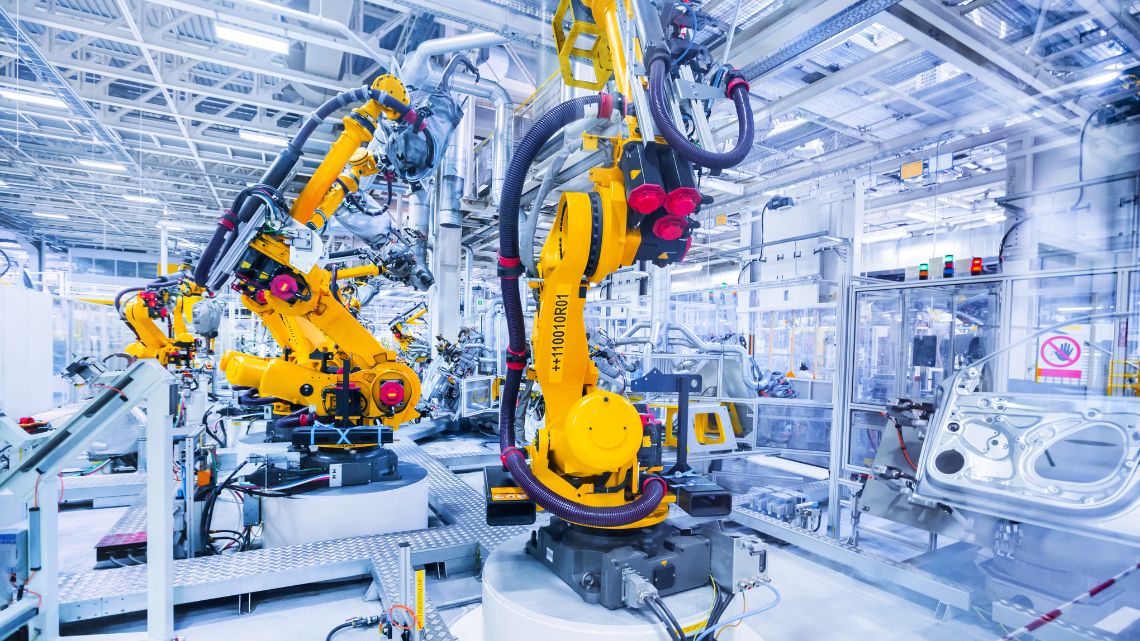
Imagine a robot, and we instantly picture a heavy metal titan clanging down the ramp of a landing craft, shaking the tarmac under the glare of a thousand spotlights. That’s the version the silver screen promised us so far – a singular, thunderous moment where the world as we knew it ended and the era of the machine began.
But life is never a cinema. Yet, the robot arrived. But without any theatrical illusions- no smoke, no hydraulic hiss, no earth-shaking footsteps. It silently crept in with quiet assertion and dissolved into our systems.
While we were watching the skies for a metal giant, the real transformation was happening in the silence of a server room, with the flicker of the fibre-optic cable. The “robot” arrived as a line of elegant, ruthless code. It didn’t bruise the tarmac; it rewired the bedrock. It settled into our power grids, our logistics chains, and our design software, optimizing the world while we slept.
They learnt to predict, adjust, and calibrate. And with that quiet transformation came a deeper question that no code sheet could probably answer: What does it mean to be an engineer when machines can now think alongside us?
From Master of the How to Architect of Intent
The arrival of robots has been less a big bang and more a tide—slow, steady, and impossible to hold back. It is not announced by any grand spectacle, but by the soft humming of thousands of algorithms settling into the bedrock of our infrastructure.
For decades, the engineer was the master of the how. The keeper of calculations. The steward of slide rules, drafting tables, and later, CAD stations. Their value lay in precision, in knowing how to make things work.
But as automation matures, from tool to teammates, the gravity of the profession begins to shift.
Tasks once defined by constant monitoring, manual calibration, and reactive troubleshooting are increasingly handled by intelligent systems. Predictive maintenance identifies issues before they lead to breakdowns. Digital twins simulate stress long before materials fail. Automated quality systems detect anomalies invisible to the human eye.
What’s left to be done is judgment.
Modern engineers are no longer valued only for what they can build, but how they think. The exigency of the moment demands interpretation of the discerning questions like:
Which processes deserve automation, and which require human oversight?
Which efficiencies improve outcomes, which quietly erode resilience?
Which optimizations serve the system, and which merely serve short-term metrics?
This requires a different kind of mastery—less tactile, more cognitive. Less about hands-on adjustment, more about pattern recognition, systems thinking, and potential reasoning.
When machines can self-correct, self-optimize, and self-learn, performance becomes a baseline expectation, rather than a differentiator.
Thus, in an automated world, the engineer’s value shifts upward, from execution to insight as they evolve from executors to architects of intent.
The Moral Load-Bearing Inside Engineering
No flagship story of modern engineering can ignore its evolving relationship with responsibility. Automation engineering has become one of the most powerful enablers of sustainability- embedding ethical weight into every line of code, every decision, and every outcome that scales beyond human oversight.
Intelligent systems waste less, consume less, and predict more accurately. They stabilize renewable energy flows. They regulate energy consumption in buildings. They regulate material usage with near-zero excess.
In a world navigating climate urgency, this is not a matter of convenience. It is an obligation.
But sustainability is only one layer of ethical clarity. The deeper question that automation raises is accountability.
When we hand the pen to the machine, we are not just delegating work; we are delegating agency. If an algorithm prioritizes a city’s traffic flow for speed, it may inadvertently cut off the veins of a low-income neighbourhood, creating a desert of isolation in the name of efficiency. The machine didn’t “fail” by its own logic; it did exactly what it was commanded. It simply lacked the soul to understand the cost.
This is where the engineers must find their new footing. In the seamless integration of ethical clarity within the rigid logic of automation, they must exercise balance. Alongside speed and accuracy, the modern engineer must now weave a deliberate, ethical lucidity into the very fabric of our technical architecture.
Engineering choices now shape not only products, but behaviours, access, and long-term societal outcomes.
In this sense, zero-carbon engineering is not simply an environmental target. It is part of a broader moral recalibration, where success is measured not only by what systems achieve, but by what they preserve.
This is the benchmark of modern engineering.
What Engineers Must Unlearn
Every technological revolution demands not just new skills, but the courage to unlearn the old certainties.
The automated era challenges some of engineering’s most ingrained instincts:
- The belief that safety can be secured through control.
- The assumption that efficiency always serves progress.
- That comfort doesn’t always come from predictable outcomes.
As systems learn and data evolves, automation becomes inherently ambiguous. Engineers must become comfortable recalibrating frameworks rather than relying on fixed designs.
The future engineer may be the best coder in the room, yet they must know when to slow down. He is the one who anticipates the real-world outcomes of deploying such tools and designing machines that not only perform, but also protect people, environments, and societies over time.
Leadership in an Automated Age
For global entrepreneurs and engineering leaders, automation is no longer a competitive edge. It has become an operational imperative. And the organizations that cultivate engineering leadership within this environment are doing a commendable job. High-performing companies are not those that automate fastest, but those that automate wisely—aligning technology with purpose, values, and long-term vision.
This demands engineers who can speak multiple languages: technical, strategic, and human. We need professionals who understand that automation is not a replacement for talent, but a multiplier of it.
When routine work disappears, creativity must rise. When systems stabilize operations, human insight must guide direction. When machines handle complexity, leadership must handle meaning.
After the Robot Arrives
The arrival of automation is not the end of engineering as we know it. It is its quiet reinvention.
The future does not belong to engineers who compete with machines on speed or memory. It belongs to those who complement machines with wisdom, foresight, and ethical clarity.
After the robot arrives, engineering becomes less about proving what technology can do—and more about defining what it should do.
And in that shift lies the real transformation—not building smarter machines, but becoming wiser engineers.