
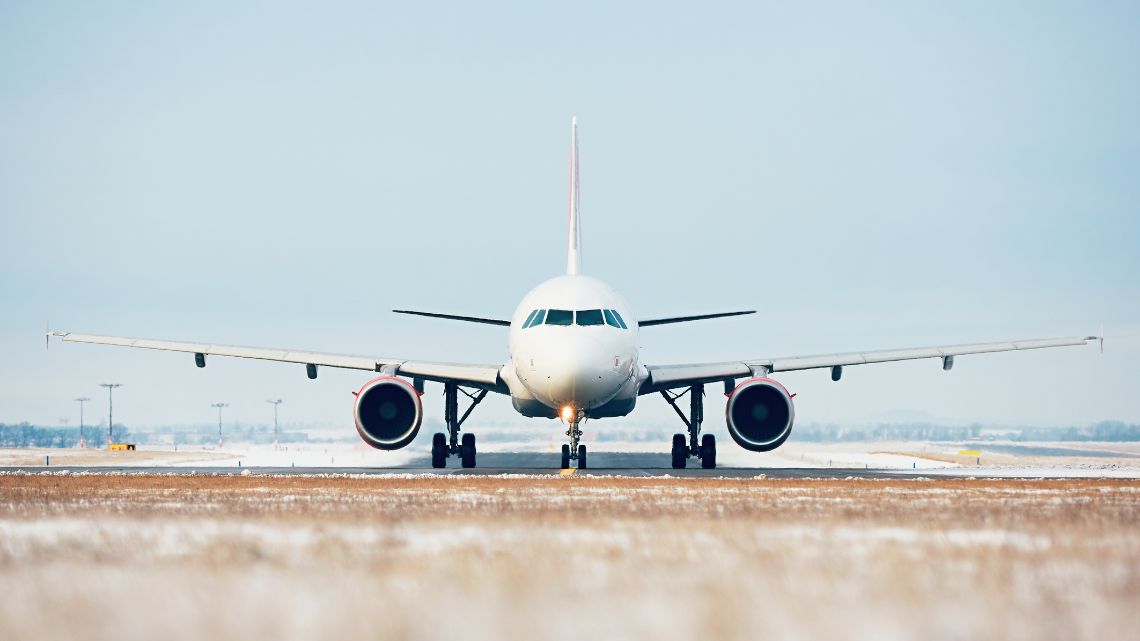
At dawn, an aircraft lifts off the runway almost unapologetically, its roar dissolving into the dim light of the horizon. It is no longer an awe-inspiring spectacle, just an aircraft gliding into unfathomable vastness, restrained by engineering and disciplined by human resolve.
To a casual observer, it seems effortless – metal overcoming gravity with quiet confidence. For an engineer, however, the climb is extraordinary: aerodynamics, structural strength, propulsion, and control systems, refined through iteration and human judgment, converge within precise limits.
Every aircraft, spacecraft, or satellite survives because thousands of small decisions agree with one another.
Lift Is Not Magic. It Is Balance
When an aircraft lifts off, nothing supernatural happens. Air accelerates over the wing, pressure shifts, and forces take shape. That pressure difference produces lift. But understanding lift is only the beginning. Engineers must calculate how much lift is required, how it gains momentum with height, and how it changes when conditions refuse to cooperate – across altitude, velocity, and weather.
A wing is not a solid slab; it is a carefully shaped structure designed to bend. Yes, bend—precisely, repeatedly, and without improvisation. Modern wings flex upward during flight, easing stress rather than resisting it outright. This movement is intentional. Engineers calculate load paths to ensure forces travel through the structure smoothly, rather than concentrating where failure might begin.
This philosophy – guides forces rather than opposes them blindly – runs through aerospace design. In aerospace engineering, resilience rarely looks rigid.
Strength Is Meaningless Without Lightness
Making something strong is easy. You can always add materials, redesign, and uprate the system. Making it strong without making it heavy is where the discipline of Aerospace Engineering begins.
Every additional kilogram demands more lift. More lift demands more fuel. More fuel demands more structure. The loop is unforgiving. This is why aerospace engineers obsess over materials, load paths, and efficiency measured in decimals.
In aerospace, strength is impressive only until it becomes heavy. Then it becomes a problem.
Aluminium alloys earned their place through reliability. Composite materials now extend that legacy, offering higher strength-to-weight ratios and resistance to fatigue and corrosion. These materials are layered with intent, designed to carry loads only where necessary. Excess is engineered out.
Failure Is Anticipated Before It Happens
In aerospace systems, failure doesn’t occur suddenly. It announces itself quietly – through microcracks, sensors drift, and electronics that heat and age over time. Aerospace engineers are trained to listen to these signals long before they escalate.
Redundancy plays a critical role. Important systems are duplicated or triplicated so that no single fault becomes catastrophic. This is not pessimism – it is realism.
The Challenger and Columbia tragedies are still studied not as historical footnotes, but as ethical reminders. In June 2025, Air India Flight 171 — a Boeing 787-8 Dreamliner bound for London from Ahmedabad — crashed just seconds after take-off, killing 241 people on board and dozens more on the ground in one of the deadliest aviation disasters in recent history. Such events underscore the human cost behind every technical decision. Aerospace engineers inherit responsibility alongside knowledge. Every design review, every redundancy, every conservative margin carries the weight of lives that will never know their names.
When Air Disappears, Engineering Gets Stricter
In space, there’s no comfort zone.
Satellites operate in a vacuum, exposed to radiation and temperature swings that can exceed hundreds of degrees. There is no mechanic on standby. Every system must diagnose itself, correct itself, or fail safely.
This is why space systems rely on fault-tolerant software, hardened electronics, and conservative design margins. Longevity is planned from the first sketch. A satellite’s true success is measured not at launch, but years later, when it still responds exactly as predicted.
Launch vehicles face a different challenge: surviving extremes for minutes that feel like eternity. Acceleration, vibration, acoustic shock, and thermal stress all peak together. Reusable rockets raise the bar even higher, requiring structures that endure these forces repeatedly without losing integrity.
Computation Changed Everything but Judgment
Modern aerospace engineering is inseparable from computation. Engineers simulate airflow using computational fluid dynamics, mapping shock waves and turbulence before metal is cut. Structures are tested virtually using finite element analysis, revealing how loads distribute through complex geometries.
But simulations do not replace thinking. They depend on assumptions, boundary conditions, and interpretation. Engineers learn to question results that look perfect. Reality is rarely that polite.
This balance – between digital precision and human scepticism – is what keeps machines honest.
Designing for Humans, Not Against Them
Despite its equations, aerospace engineering is deeply human-centred.
Cockpits are designed so information appears when it is needed, not when it is distracting. Automation assists rather than overwhelms. Systems communicate failure clearly, without ambiguity. Engineers assume that pilots and operators will face stress, fatigue, and incomplete information—and they design accordingly.
Empathy is built into logic diagrams and interface layouts. It just wears a technical disguise.
The New Playground
Now, the game is evolving. It’s not just about surviving the journey anymore. The new challenge is living there. Engineers are designing 3D printers that could use moon dust as ink to build habitats. They’re planning how to split ice from asteroids into hydrogen for fuel and oxygen to breathe. They’re figuring out how to build a gas station in zero gravity. It’s about becoming a resident of space, not just a visitor.
So, the next time you see a streak in the sky – maybe the International Space Station, a silent star gliding past – look closer in your mind.
See the temperature-controlled body. See the spinning wheels fighting sunlight. See the ghost of a thousand violent shakes that it endured on Earth. See a machine holding a decade of human conversation in its memory, patiently executing its mission in the silent, rule-bending vastness.
That silent star isn’t just floating. It’s winning an endless, incredible battle against a universe that plays by its own rules. And it was built by people who learned to speak the language of the Universe.