
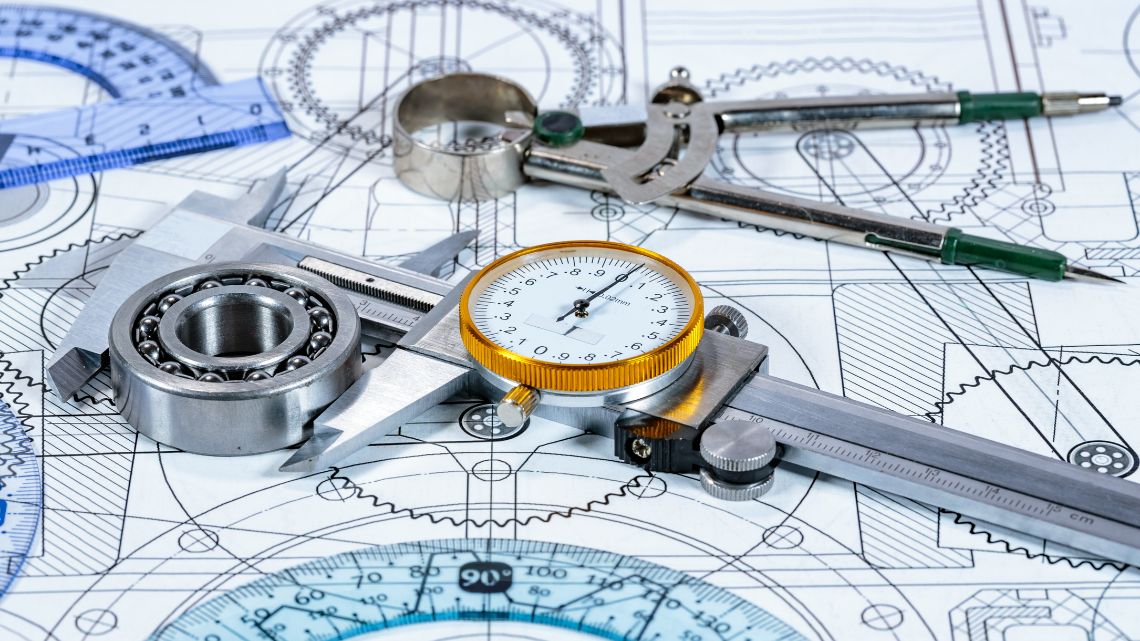
Engineering is often presented as a clean translation of scientific principles into physical outcomes, a convenient narrative that hides the real complexity beneath the surface. In practice, engineers do not simply “apply” physics and mathematics; they interpret them under real-world constraints, conflicting incentives, incomplete data, and an environment that rarely behaves as the equations predict.
The scientific aspect of engineering begins with the recognition that nature offers no negotiation. Gravity does not compromise. Heat does not pause. Stress, load, and entropy are indifferent to budget cycles and executive deadlines. So the engineer’s task is not merely to understand the rules, but to design within those rules while still meeting economic, social, and operational expectations. In this sense, physics and mathematics are not tools, they are boundary conditions for ambition.
The Discipline That Governs Innovation
Every breakthrough, from aerospace propulsion to urban water systems, sits on a foundation of scientific rigor. But what makes this aspect increasingly strategic is the pace at which engineered systems are shifting from predictable to probabilistic. Traditional engineering relied on stable boundaries: materials performed consistently, operating conditions stayed within expected ranges, and risk could be controlled through redundancy.
That world no longer exists. Modern systems operate in high-variability environments, autonomous vehicles navigating dynamic cities, renewable grids balancing irregular energy inputs, and supply chains adjusting to geopolitical uncertainty. These systems demand a new scientific lens, one that treats physics not as fixed instruction but as a flexible framework capable of adapting to continuous change.
Mathematics, in this context, becomes a decision architecture. It structures uncertainty, quantifies trade-offs, and reveals the hidden costs of design choices. Optimization models determine resource layouts; statistical forecasting anticipates failure modes; simulation algorithms stress-test decisions before a prototype is ever built. Scientific thinking becomes a form of governance: it decides what is possible, what is dangerous, and what is merely wishful.
From Deterministic Equations to Dynamic Judgment
One of the most persistent misconceptions in engineering is the belief that equations deliver definitive answers. In reality, equations rarely conclude anything on their own; they sketch ranges, probabilities, and conditional outcomes. They provide a structured beginning, not a final verdict. Consider a structural model that calculates the expected load on a bridge. The math may be sound, yet the engineer must think beyond the neat boundaries of the equation, the reliability of material suppliers, the slow accumulation of environmental stress over decades, and the cascading impact should even a single variable behave unexpectedly.
This is where the scientific aspect of engineering becomes far more demanding. The field is shifting away from deterministic certainty and toward adaptive judgment. Mastery no longer lies only in handling formulas, but in understanding how reality bends, distorts, or sometimes outright rejects the assumptions behind them.
Every calculation carries a quiet set of beliefs about how the world will behave. Skilled engineers interrogate those beliefs rather than accept them uncritically. In this evolving landscape, the scientific mindset becomes a strategic differentiator. Success depends not on the volume of tests performed, but on how rigorously their underlying logic is challenged. The organizations that excel are those willing to question the premises everyone else takes for granted. They recognize that scientific thinking is not a mechanical exercise. It is a form of strategic intelligence, one that elevates analysis into foresight and transforms equations into meaningful decisions.
The Power of Predictive Science
Another transformative shift is the rise of computation. Digital twins, machine-learning simulations, and advanced finite-element modeling, these tools extend the scientific aspect beyond calculation and into foresight. Engineers can now simulate the life of a bridge before a single beam is installed, test a turbine under thousands of virtual climate scenarios, and predict the failure of a battery years before degradation becomes visible.
Physics becomes a forecast. Mathematics becomes a prediction engine. Engineering becomes a form of time travel—anticipating performance under extreme, unlikely, or future conditions that conventional testing cannot reproduce.
But predictive capability also introduces new forms of responsibility. A model is only as honest as its inputs, and the complexity of modern simulations often obscures the assumptions behind them. The scientific aspect now demands transparency: Why do we trust the model? What biases are baked into the algorithm? Where might the simulation fail? The organizations that thrive will be those that treat scientific modeling not as automation but as an extension of human judgment.
Constraints as the Hidden Engine of Innovation
Perhaps the most counterintuitive part of the scientific aspect is its creative power. People often assume that constraints limit innovation, but in engineering, constraints are the reason innovation exists at all.
When a design must withstand extreme temperatures, physics becomes the filter that removes the impossible and highlights the actionable. When a system must optimize for energy, cost, and lifespan simultaneously, mathematics defines the feasible trade-off space. By clarifying what cannot be done, science sharpens what can be done.
This constraint-driven creativity separates engineered innovation from speculative futurism. It ensures that ideas do not collapse under real-world pressure. It turns engineering into the practice of disciplined imagination, ambition framed by reality.
Why the Scientific Aspect Matters More Than Ever
As engineered systems become more autonomous, interconnected, and exposed to climate volatility, the scientific foundation becomes the stabilizing force that prevents complexity from turning into chaos. The next generation of infrastructure, transportation, energy, and healthcare systems will not merely require more computation or more automation; they will require deeper scientific discipline.
Physics still governs the material world. Mathematics still governs the logic of systems. And engineering remains the only profession asked to reconcile both while delivering solutions that must perform under risk, uncertainty, and consequence. The scientific aspect is not a chapter in engineering; it is the conditions under which every chapter is written.