
Engineers never designed some of history’s strongest walls just to last forever; they built them to survive the immediate dangers they knew were already coming.
In those times, medieval cities feared invading armies, and so they raised stone fortifications. Similarly, coastal communities didn’t know of the unexpected ebb and flow of tides, and once they did, they built harbors around their shorelines. Engineers calculated rivers that they could predict, studied winds that followed historical patterns, and recorded temperatures that rarely surprised anyone anymore. Every generation designed its infrastructure around yesterday’s risks because yesterday was the best guide it had.
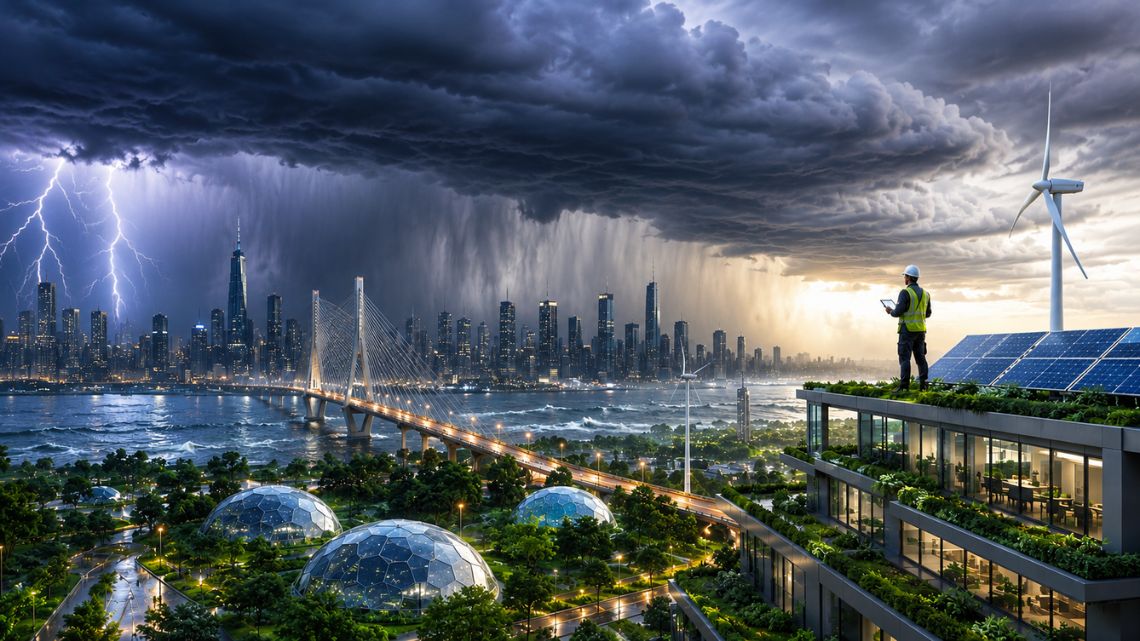
However, the solutions of yesterday fall short of today’s realities. In 2026, one of the biggest progresses made in construction and civil engineering isn’t building higher towers or longer bridges, but building resiliently against unpredictable weather. Engineers across the globe are redefining how we construct right now—from smart transit to reinforced sea walls. This is an evolution that enhances traditional designs to meet our more pressing environmental needs.
Why Old Design Standards No Longer Work
For generations, infrastructure planning depended on past recorded data. Engineers established strict design standards by studying decades of environmental factors like rainfall, wind, and seismic activity. However, that traditional approach is rapidly transforming in response to new variables.
As per the Intergovernmental Panel on Climate Change, climate change is causing more severe weather extremes across all inhabited areas. As a solution, our infrastructure must be constantly updated to survive conditions that go far beyond historical records. Modern civil engineers now embed climate resilience into every design stage. Instead of asking, “What did this climate event do in the past?” it asks, “What could it bring in the future?”
Building Cities That Work With Nature
For several years, flood management focused on moving water away from the inland areas as quickly as possible. Now, engineers embrace a different approach altogether. Instead of just building larger pipes and taller concrete walls, cities are managing stormwater locally using nature-based designs like permeable surfaces, floodable parks, artificial wet ponds, and smart drainage systems.
The American Society of Civil Engineers notes that water infrastructure experts are presently updating hydrologic models to adapt to changing climate realities. The primary goal has transitioned from simply blocking floodwaters to proactively managing them using smart infrastructure designs. But one must certainly wonder, “If cities are learning to live with water, then the coastlines are surely learning to defend against it.”
Where Oceans Push the Land Back
Managing coastal zones is now a defining global design challenge. As the weather becomes more and more erratic and sea levels continue to rise rapidly, civil engineers are replanning seawalls, ports, bridges, and waterfront developments that may serve communities for the next 100 years. Modern civil and coastal engineering integrates traditional structural barriers with nature’s own—like restored wetlands and dunes—supported by storm gates, elevated roads, and smart flood strategies.
A Frontiers research article points out that the importance of sustainable defense requires coastal barriers, river basins, and drainage networks acting as a single, connected ecosystem. And so, our coastlines are transitioning from fixed, natural borders into actively managed, holistic systems.
Preparing Every Structure for Tomorrow
But the story does not end at the water’s edge. All modern buildings and roads are now built to handle extreme climate changes. Long, intense heatwaves damage highways, bridges, and train tracks, while heavy storms require stronger building designs. What’s more is that earthquake-prone areas are also now improving their building shock absorbers and safety systems to keep structures and people safe.
Thanks to the integration of advanced materials, smart sensors in civil engineering, predictive analytics, and digital twins, engineers can decode infrastructure health long before the cracks become visible. All in all, the construction industry is becoming more and more proactive than reactive.
Engineering Confidence in an Uncertain Future
Civil engineers are battling an even greater threat than climate change in 2026: uncertainty. The Germanwatch Climate Risk Index 2025 data reports that extreme weather caused over USD $4.2 trillion in global economic losses and took over 765,000 lives between 1993 and 2022. This staggering toll is precisely why developing highly resilient infrastructure is now a global engineering need.
To stay ahead of future challenges, engineers create infrastructure that grows with us. This forward-thinking approach makes sure our cities, bridges, coastlines, and communities thrive through sustainable designs that last for a long time.