
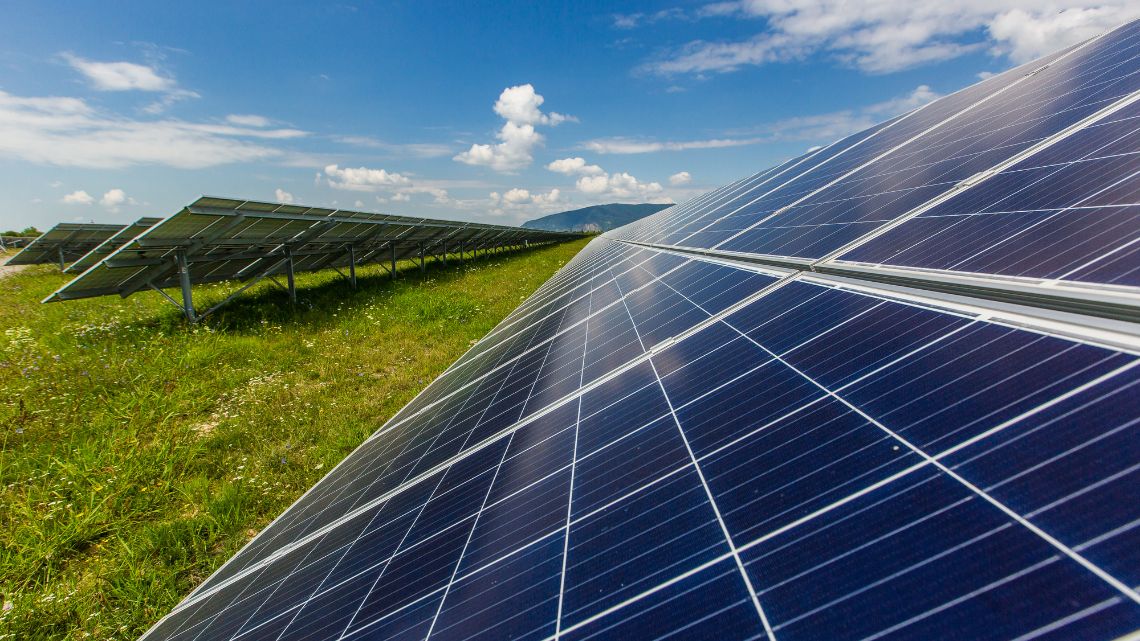
The surface of a reservoir once reflected only the sky above it; today, it paints a totally new picture—one where water itself becomes a foundation for power generation.
The once silent, empty water space has made way for a vibrant, solar-driven marvel. In 2026, solar panels floating on water are no longer an experimental installation. For a while now, they have represented a strategic shift in how engineers think about land, water, and energy together. This article explores how engineers build photovoltaic systems on lakes, reservoirs, and coastal waters to explore missed opportunities and maximize land use and energy production.
The Search for Space Beyond Land
As the global community embraced solar power, there was only one limitation that became inescapable: LAND. Large-scale photovoltaic farms struggle with agriculture, urban expansion, and ecological preservation. And there is just simply not enough land to go around with how the global population continues to rise. So engineers began focusing on a very much under-realized asset: WATER BODIES.
The World Bank reports that floating solar installations could cover a fraction of global reservoirs and still generate significant electricity. This highlights the missed opportunities of water surfaces for clean energy. This realization is what soon pushed countries across Europe, the Middle East, and Asia to invest heavily in floating solar infrastructure. And—here we are today.
Engineering Stability on Moving Surfaces
Designing a power plant on land is no easy feat. And designing one on water brings in its own set of challenges. Unlike land-based systems, floating solar platforms must tolerate constant water-level variations, water movement, and wind loads. To address this, our engineers designed modular floating structures using high-density polyethylene (HDPE) floating bridges that provide durability, flexibility, and buoyancy under prolonged UV exposure.
But anchoring these systems on water plays a crucial role. Engineers make sure the floating arrays are stable by using mooring lines and underwater anchors that adapt to fluctuating water levels. And it is this balance between flexibility and control that defines the very core of floating solar engineering.
Water: A Natural Cooling System
Floating solar systems do more than just save land space; they perform better. Water acts like an elixir that naturally cools the photovoltaic panels, in turn improving efficiency and reducing thermal losses. As per the International Renewable Energy Agency (IRENA), floating solar installations can be 5–10% more effective compared to land-based systems due to this exact cooling effect. This approach also offers engineers a dual advantage of boosting energy yields while maximizing land usage.
Connecting Floating Power to the Grid
One of the key differentiators of floating solar systems lies in their compatibility working with existing energy systems. Engineers deploy these floating systems on reservoirs that are connected to hydropower plants. This combined system allows operators to use the existing transmission infrastructure while balancing energy generation.
Solar produces power during the whole day, while hydropower compensates during low-light hours. The International Energy Agency (IEA) observes that hybrid renewable systems improve grid stability and maximize resource utilization, establishing them as the standard for sustainable energy systems.
Scaling Solar Beyond the Shoreline …
Floating solar panels have moved rapidly from small-scale pilot projects to large-scale utility developments. China, India, and even Singapore now operate some of the world’s largest floating solar farms, demonstrating technical soundness and financial profitability.
Industry analysis frequently cites major energy agencies, showing that the global floating solar capacity has developed rapidly over the past five years, with gigawatt-scale projects becoming the standard. This growth reflects the significant advancements in advanced technology today and the urgency to utilize it to scale renewable energy without competing for land resources.
A New Surface for Energy
Floating solar panels are not about to replace land-based systems; it simply expands the canvas on which energy systems can operate. It transforms reservoirs, lakes, and even coastal waters into useful infrastructure, redefining how space itself contributes to energy generation.
As of 2026, the challenge for engineers is not finding space for solar installations; it is maximizing untapped potential in a space-limited world. And to a greater and greater extent, the answer is not grounded, but riding just above the waves, where clever engineering harnesses the sun on floating reservoirs.