
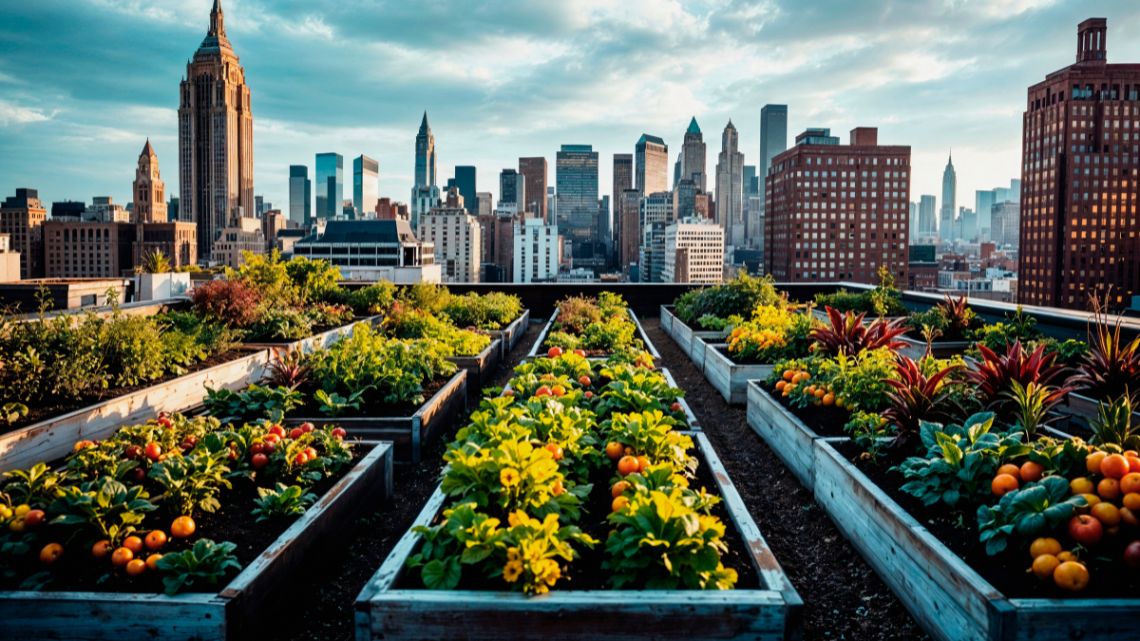
The future of farming does not always begin with a seed and fertile soil; it often begins with a question: “What happens when the land we so entirely depend on for food can no longer keep up with the people who depend on it?”
As scary as that can be, agriculture in 2026 has evolved from horizontal farming into automated, vertical, controlled systems. Inside cities where land is scarce and demand is relentless, our engineers are building farms that rise instead of spread.
When the Land Could No Longer Keep Up …
Urban residents continue to expand, with around half of the world’s population living only in cities today. This leads to immense pressure on traditional farming systems that rely heavily on rich land and predictable climates. Nearly 68% of the global population is expected to live in urban areas by the year 2050, as per the Food and Agriculture Organization, deepening the need for local food production systems.
Our engineers race to solve this problem ahead of time by bringing agriculture closer to where people are. While a Farmer’s Market could just be a minute’s away, or even a Food Hub, or a community garden within reach, there are more locavore options available today than a decade ago. Likewise, vertical farming systems also help city dwellers produce fresh crops within their own boundaries. To add even more value, these local sustainable food systems avoid the risks that come with long-distance supply chains.
Designing Nature Under Control
Vertical farms absolutely do not replicate nature in any way; they simply redesign it. Engineers build controlled environment agriculture (CEA) systems so that temperature, light, humidity, and nutrients are controlled within specific parameters. For instance, LED lighting systems deliver wavelengths specially optimized for plant growth, while hydroponic and aeroponic systems supply nutrients directly to plant roots without soil.
The National Aeronautics and Space Administration shares that controlled environment systems can grow crops with up to 90–95% less water than traditional farming methods. Given today’s resource-limited environments, CEA systems make farming highly efficient. Moreover, they also promote an industrial approach to farming, driving consistency and growth through data rather than unpredictability.
Growing Under Artificial Light
Light. It was once a natural resource provided by the sun, but now falls under engineering control. Meaning, modern vertical farms rely on advanced LED arrays that adjust their intensity and spectrum based on crop type and its growth stage. Engineers design these systems in such a way as to maximize photosynthetic efficiency while minimizing energy consumption.
Several companies across Asia, North America, and Europe now bring “light recipes” that accelerate a crop’s cultivation cycles and boost overall agricultural productivity. This level of controlled environment agriculture (CEA) allows crops such as leafy greens, strawberries, and herbs to grow year-round, unaffected by external weather conditions. For our engineers, light is more than just a source of illumination in agriculture; it is an important tool for productivity.
Automation at the Heart of Modern Agriculture
Vertical farms operate as automated systems rather than manual operations. First, sensors track nutrient levels, pH balance, plant health, and temperature in real time. Then, AI-driven platforms analyze the data to adjust inputs right away, making sure ideal growth conditions are met throughout. On top of that, robotic systems also assist with the seeding, transplanting, and harvesting.
As per the International Society for Horticultural Science, automation in controlled agriculture significantly improves reliable yields while reducing manual inconsistencies. Engineers no longer manage fields; they manage systems that manage the fields.
Changing Where and How Food Grows Hereafter
There lies a multidisciplinary engineering effort at the base of every vertical farm that is built today. Agricultural engineers design crop systems, mechanical engineers work on structural frameworks, electrical engineers optimize lighting and power usage, and software engineers build data-driven control platforms. Together, the team creates environments where plants grow by planned design.
In doing so, vertical farming aims to only complement, not replace, traditional farming. It reduces the growing gap between urban demand and rural supply while reducing environmental impact and resource usage.
In 2026, as cities expand and climates become volatile, people do not ask whether agriculture can adapt but how quickly it can scale. And within that answer lies a shift toward vertical, rather than horizontal, farming—freeing up vast stretches of land. Today, our skilled engineers continue to explore more sustainably healthy alternatives and rewrite agricultural geography, thus enabling skyscraper farms to feed urban populations.