
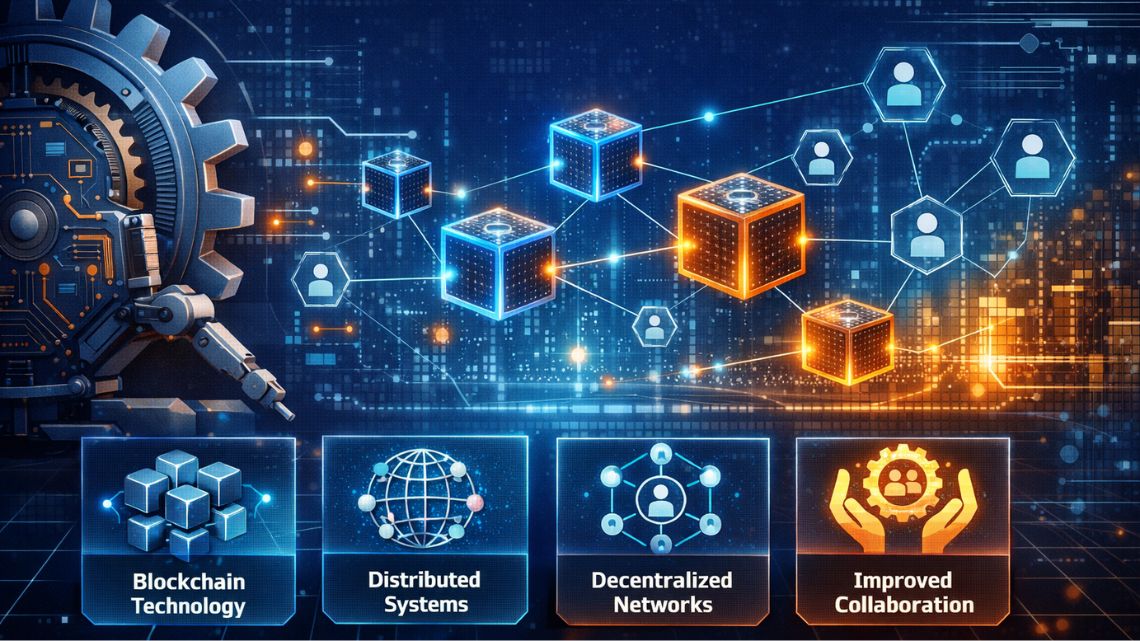
If the Chemical Engineers are brewing lab-grown leather and the Industrial Engineers are turning off the lights in their warehouses, what are the Systems Engineers doing? Simple: they’re building the ‘Brain’ that connects it all. But here’s the twist—the brain is no longer a single, giant organ. It’s becoming a decentralized web of ‘mini-brains’ living right on the edge of reality.
Welcome to Edge Computing and System-of-Systems (SoS) Engineering. For the modern tech entrepreneur, this is the end of the ‘Cloud-Only’ era and the beginning of a world where your hardware thinks for itself.
The Cloud is Too Far Away (And Too Slow)
For a long time, the Silicon Valley dream was: ‘Send all the data to the Cloud, let a giant server in a cold room in Oregon think about it, and send the answer back.’
That’s fine if you’re asking Alexa for the weather. It’s a disaster if you’re a self-driving car trying to decide if that shadow is a plastic bag or a pedestrian. By the time the data travels 2,000 miles to the Cloud and back, you’ve already hit the bag (or the person). In the engineering world, we call this the ‘Latency Gap.’
Edge Systems Engineering solves this by putting the ‘intelligence’ directly into the device—the camera, the sensor, or the robot arm. It’s like giving your fingers their own little brains so they don’t have to wait for instructions from the head to pull away from a hot stove. For the entrepreneur, ‘Edge-Native’ hardware isn’t just a feature; it’s a safety and performance requirement that the Cloud simply cannot meet.
From ‘Single Machine’ to ‘System-of-Systems’ (SoS)
In the old days, a Systems Engineer designed a ‘thing’—a tractor, a drone, or a smart thermostat. Today, entrepreneurs aren’t selling ‘things’; they’re selling Ecosystems.
An SoS is a collection of independent systems that pool their resources to create something bigger than the sum of its parts. This is the ultimate ‘Avengers Assemble’ moment for hardware.
- The Smart City: Your autonomous bus (System A) talks to the smart traffic light (System B), which is receiving data from the weather sensor (System C) and the emergency response grid (System D).
- The Diplomatic Challenge: None of these systems were necessarily built by the same company. Engineering an SoS is like being a diplomat at the UN; you have to make sure everyone speaks the same language (Interoperability) without anyone’s ego (Proprietary Code) getting in the way. For the startup founder, the ‘win’ isn’t building the best device; it’s building the best protocol that everyone else has to follow.
The ‘Latency’ Moat: Why Speed is the New Gold
In the world of Systems Engineering, ‘Latency’ (the delay between action and reaction) is the enemy of profit. If your system takes 100 milliseconds to respond and your competitor’s takes 10, you aren’t just slower—you’re obsolete.
Entrepreneurs who can engineer systems with Zero Latency are building massive competitive moats.
- The ‘Smart’ Power Grid: If a transformer blows, a decentralized system can reroute power in milliseconds. If it had to wait for a central human-operated command center to approve the move, the whole city would go dark.
- Remote Surgery and the Tactile Internet: A surgeon in London operating on a patient in Singapore via a robotic arm can’t have a ‘loading’ icon pop up. Systems Engineers are using 5G and Edge Computing to create what’s known as the Tactile Internet—where the ‘feel’ of the surgery is transmitted back to the doctor in real-time. This isn’t just cool tech; it’s a multi-billion dollar shift in how healthcare is delivered.
The Business Case: ‘Data Gravity’ and Security
Why are Venture Capitalists betting on decentralized systems? It’s not just because robots are cool. It’s because of Privacy, Bandwidth, and Data Gravity.
- Bandwidth Costs: Moving terabytes of raw video data from a factory to the Cloud is like trying to shove a whale through a garden hose. It’s expensive and slow. If you can process that video ‘at the Edge’ and only send a tiny text alert saying ‘Hey, the belt is broken,’ you save a fortune.
- Security & Privacy: If you don’t send the data to the Cloud, it can’t be hacked in transit. For medical or defense startups, ‘Edge-Native’ is the ultimate ‘What happens in the device, stays in the device’ privacy policy. In an era of massive data breaches, ‘No Cloud’ is becoming a premium selling point.
The ‘Orchestration’ Problem: The New Job for Systems Engineers
As we build these decentralized webs, the biggest bottleneck is Orchestration. How do you update the software on 10,000 different ‘mini-brains’ scattered across a continent without breaking the whole system?
This is where the new breed of DevOps Systems Engineers comes in. They aren’t just writing code; they’re designing the ‘Automated Evolution’ of the system.
- The ‘Fleet Management’ Model: For an entrepreneur, the ability to push a ‘software patch’ to a fleet of machines in the field is what separates a scalable business from a logistical nightmare.
- Resilience: If one ‘mini-brain’ fails or gets hacked, the rest of the system should isolate it and keep running. Designing for ‘Graceful Failure’ is the hallmark of a world-class Systems Engineer.
Digital Twins: The Blueprint of the Invisible
You can’t manage 10,000 edge devices if you don’t know exactly what they’re doing. This is where the Digital Twin comes back into play. In Systems Engineering, the Digital Twin acts as the ‘Ghost in the Machine.’ It’s a virtual replica that mirrors the physical system in real-time.
For the entrepreneur, the Digital Twin is the ultimate sales tool. You can show a client exactly how their decentralized network will behave under stress before they ever spend a dime on hardware. It turns ‘Trust me, it works’ into ‘Look at the data, it’s already working.’
The System is the Product
We are moving away from a world of ‘dumb’ hardware and ‘smart’ clouds toward a world of Ubiquitous Intelligence. For the Systems Engineering entrepreneur, the ‘Product’ isn’t the box you ship; it’s the invisible network that keeps that box thinking, talking, and evolving.
The future of technology isn’t hidden in a server farm in the desert. It’s right here, on the edge of your screen, your car, and your factory floor. The lights are on, the brains are local, and the system is finally awake. If you’re still building ‘dumb’ hardware that waits for the Cloud to tell it what to do, you aren’t just behind the curve—you’re off the map.