
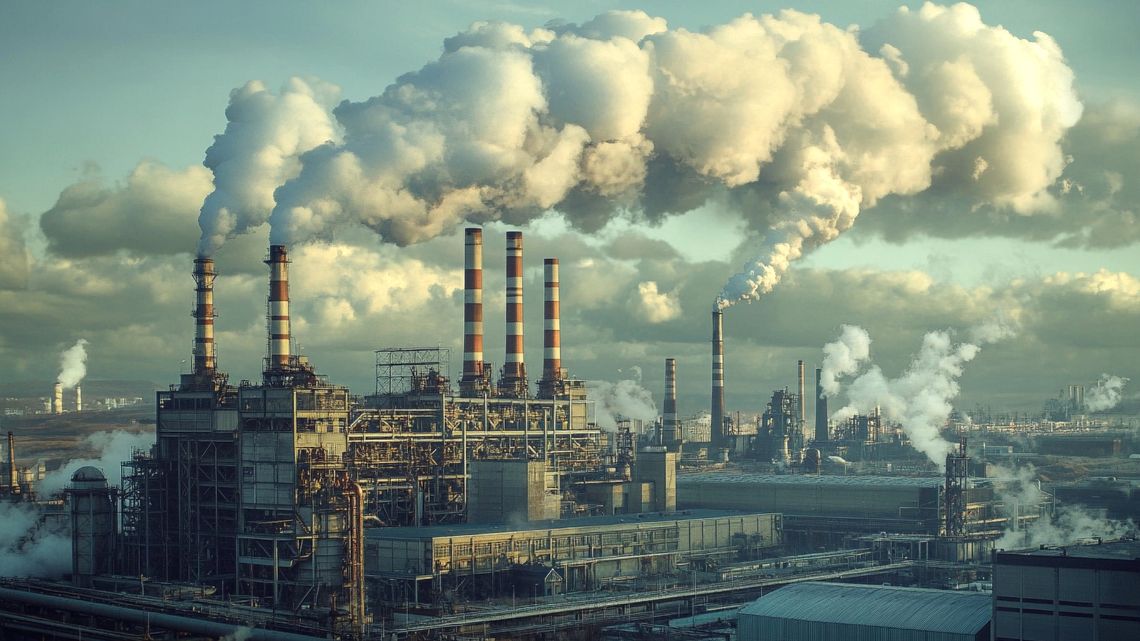
A paradox of progress, the materials that built the modern world—steel, cement, and fossil fuels—also contribute to its carbon footprint. For several decades now, industries have made progress in furnaces and reactors that consume vast amounts of fossil energy. Today, those very same systems trigger a new problem: not how to produce more, but how to produce sustainably.
In 2026, industrial decarbonization is an ongoing engineering effort—and it is our chemical engineers leading the charge. This article examines how chemical engineers are working to reduce emissions and greenhouse gases across the steel, cement, refining, and manufacturing industries today.
The Carbon Challenge Inside Heavy Industry
As per statistics, the heavy industry is among the largest contributors to global emissions. According to the International Energy Agency (IEA), the heavy industry forms nearly 25% of global CO₂ emissions, with steel, cement, and chemicals forming the rest 75%. These emissions arise not just when energy is being consumed, but also during the chemical reactions.
For our chemical engineers, this creates a distinctive issue: they simply cannot switch fuels or improve efficiency and just carry on; they can only redesign the very processes that define industrial production.
Reengineering the World’s Most Carbon-Intensive Materials
Traditionally, making steel depends on coal-fired blast furnaces, where carbon acts as both fuel and reducing agent. To avoid the increase of such unhealthy fumes, engineers today are gradually turning to hydrogen-based reduction processes. According to the International Renewable Energy Agency (IREA), green hydrogen could significantly reduce harmful emissions in steel production by replacing it with coal in direct reduction systems.
Yet, when it comes to cement production, the process presents an equally difficult challenge. The calcination of limestone releases CO₂ as part of its chemical reaction. To avoid this, engineers use alternative binders, supplementary cementitious materials, and carbon capture systems directly in production lines. These initiatives gradually help lower the carbon footprint with each ton produced.
The Rise of CCUS Technologies
In chemical factories and refineries, engineers capture and isolate CO₂ before it escapes into the Earth’s atmosphere. This is carried out by using carbon capture, utilization, and storage (CCUS) technologies.
As per the Global CCS Institute, the 2025 report reveals more than 40 commercial CCUS facilities operating worldwide, with dozens more still under construction. These technologies capture hazardous emissions directly from industrial exhaust streams and either store them underground or reuse them in other chemical processes. By turning CO₂ from a waste product into a functional alternative, CCUS changes how industries approach emission control practices nowadays.
Engineering More with Less Energy
Like carbon capture techniques, engineers redesign industrial systems around electrification—replacing fossil fuel-based heat with electricity. Electric furnaces, plasma heating, and renewable-powered reactors now also reduce their dependence on coal and gas.
Side by side, engineers also apply process intensification techniques, where they redesign systems to deliver the same output but with fewer steps, less energy, and smaller equipment. As per the World Economic Forum, industrial electrification and efficiency improvements can abate emissions while maintaining productivity. This only goes to show that decarbonization does not require sacrificing output; it just requires smarter engineering on our part.
The Realities of Decarbonization in 2026
For many engineers till now, decarbonization is not seen as just some big idea or long-term goal; it is now something they deal with every single day on the factory floor. Choices such as energy source, raw material selection, and operating conditions all influence emissions.
Today, engineers at chemical plants describe how teams evaluate every change not just for cost or yield, but also for its carbon impact. This shift signals a major transition in industrial thinking. And so, chemical engineers no longer focus on just cost and production; they now consider how every decision affects carbon emissions and environmental impact moving forward.
Building the Next Industrial Era
Industrial decarbonization is not a linear road to systemic transformation. Instead, it combines green hydrogen, carbon capture, electrification, and material innovation into an evolving system. And our chemical engineers sit at the center of this transition, leading the way toward a lower-carbon industrial future.
The industries that once defined the carbon age now also define the very road that lies beyond it. Steel, cement, refining, and manufacturing will last and adapt to the changing world. And as they do, chemical engineers will only continue redesigning the processes that sustain them. 2026 no longer asks if heavy industries can decarbonize, but rather how fast our engineers can make it happen—and how far that transformation can go.