
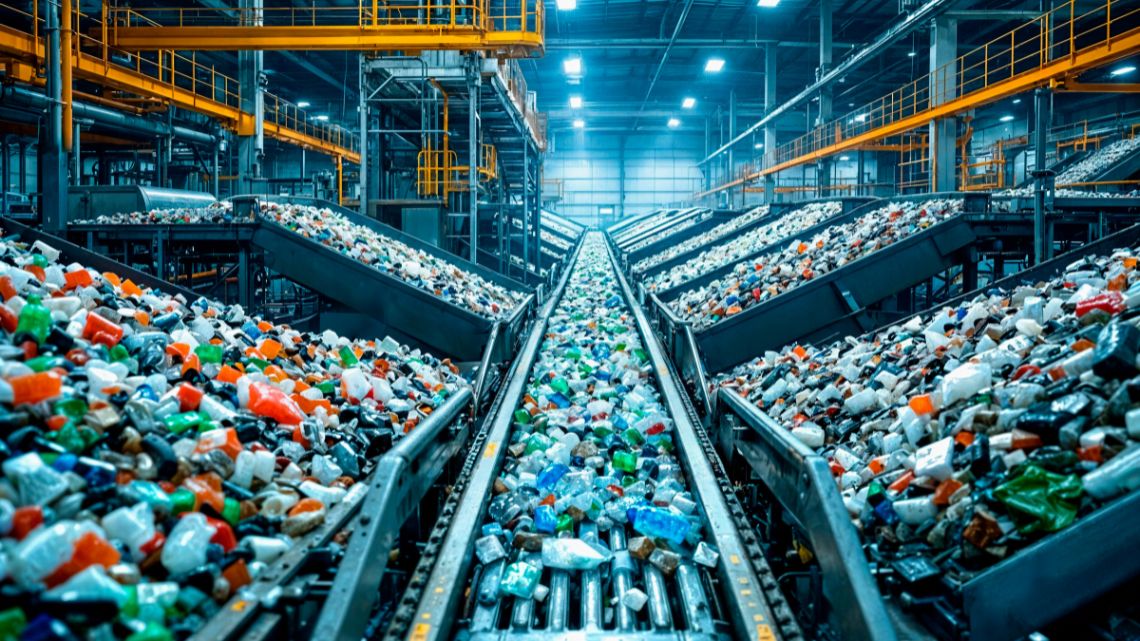
The plastic we use today never truly disappears; it simply waits for engineers to decide what it becomes next. For several decades now, industries across the world treat plastics as materials that are produced, used once, and immediately disposed of. Long gone are the times when chemical engineers treated plastics as a one-time waste. Today, used plastics are resources moving steadily through continuous cycles of transformation. In 2026, the reinvention of plastics revolves around redesigning them to return, regenerate, and remain cost-effective.
Why Traditional Recycling Falls Short…
For many years, mechanical recycling formed the platform for plastic waste management. At the time, engineers gathered discarded plastics, sorted through each one of them, and then melted and remolded them into new products. Despite the materials getting a second chance at life, this approach fell flat. The melting and remolding of the materials struggled to maintain quality via continuous processing cycles.
The Organization for Economic Cooperation and Development (OECD) records that just 9% of the global waste collected today from garbage bins and dumps gets recycled, highlighting the limits of traditional recycling systems. From a bird’s-eye view, contamination, polymer degradation, and composite packaging are the ones that prevent mechanical processes from recovering plastics efficiently. Such constraints lead chemical engineers to rethink the recycling of plastics at the molecular level rather than at the product level.
Breaking Plastics Down Only to Build Them Again
Chemical recycling of plastics is when the material is broken down to the molecular level, allowing the production of new materials that match the quality of virgin plastics. Instead of melting and reshaping plastic, engineers use catalytic depolymerization, pyrolysis, and solvent-based purification to regenerate feedstocks.
The International Energy Agency (IEA) points out that advanced recycling technologies may cause a sharp rise in plastic-waste that re-enters industrial production cycles. These systems are in place to specifically help industries process mixed and contaminated plastics that mechanical recycling cannot handle.
Large facilities across North America and Europe are promptly showing how chemical engineering transforms waste flows into consistent raw materials for manufacturing. Today, manufacturing plants are designed to include waste sorting systems, reaction systems, and purification units in continuous production lines.
The Materials that Return to Nature
As recycling technologies modernize, chemical engineers also redesign polymers for various uses. The main aim is for biodegradable and bio-based plastics to reduce long-term environmental accumulation while observing industrial performance. According to European Bioplastics, global bioplastics production capacity should exceed seven million tonnes by 2028, reflecting a corporate adoption of renewable polymers.
Engineers develop polymers that break down under controlled conditions without sacrificing their strength or stability during use. The materials derived from cellulose, plant oils, and cornstarch appear more and more nowadays in medical devices, packaging, and consumer products. This marks a fundamental shift in chemical engineering philosophy: a proactive approach for sustainable material design that considers waste-handling from the very beginning.
How Circular Manufacturing Works…
We know now that the circular plastics economy requires a twofold approach: sustainable materials and smart manufacturing systems. On account of this, chemical engineers collaborate with product designers and supply-chain specialists to ensure plastics return into production loops. According to the World Economic Forum, circular material systems can reduce large quantities of plastic leaking into the environment while simultaneously maintaining industrial growth.
Some manufacturers already use closed-loop systems, feeding production scrap directly back into processing units. And some others integrate recycled feedstocks into existing petrochemical facilities, blending traditional and circular manufacturing approaches. Especially for engineers managing these systems, circularity requires utmost precision. Feedstock purity, reaction control, and product consistency eventually all determine whether recycled plastics compete economically with virgin materials.
The Engineers Behind the Return of Plastics
Process engineers at a specialty polymers facility described their initial successful batch of chemically recycled plastic as giving waste a second life. From then on, engineers repeatedly adjust catalysts, residence times, and temperatures to achieve a consistent and reliable output.
Retrospectively, this process reflects a much broader transformation across the industry. Chemical engineers no longer design plants solely for production efficiency; they design systems that sustain materials over multiple lifecycles.
Plastic’s Next Chapter
Modern industries still rely largely on plastics for several purposes: medical equipment, lightweight structures, electronics, and packaging. However, the future of plastics will not depend entirely on abandoning polymers altogether, no matter how much it harms the environment with its massive amounts of waste. Instead, chemical engineers will simply continue to build systems where plastics circulate rather than accumulate.
Today, circular manufacturing models, molecular recycling, and biodegradable polymers are gradually redefining one of the world’s most widely used materials so far. Once upon a time, plastics were a symbol of convenience without consequence. And now in 2026, it increasingly represents a material whose value depends on how intelligently engineers design its return.