
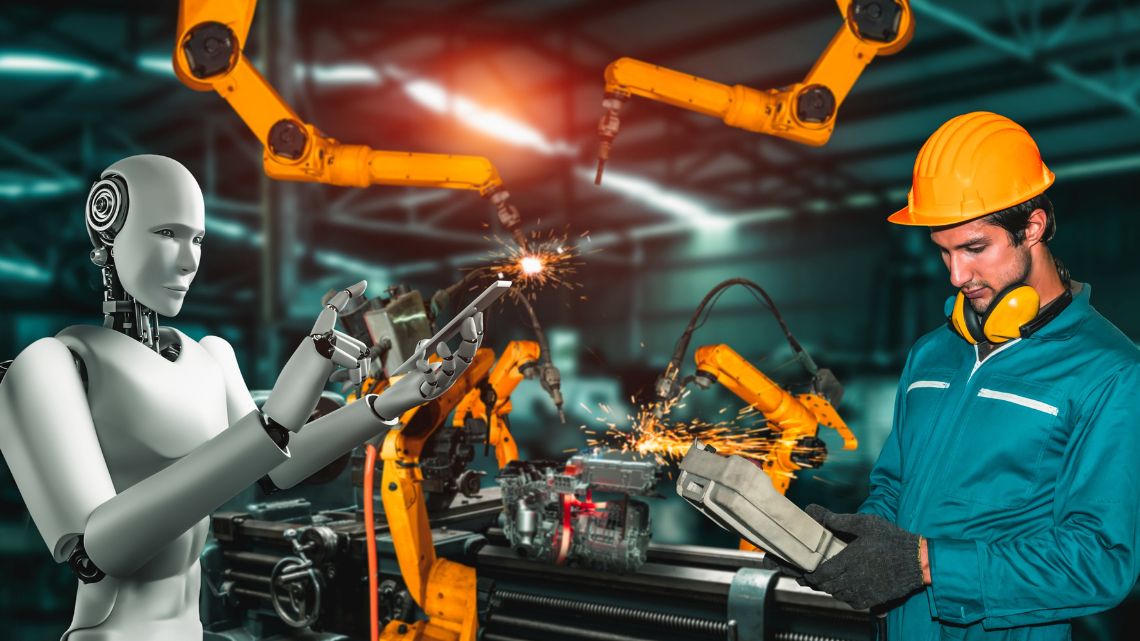
How Engineering Managers are Learning to Lead People and Algorithms at the Same Time
“Machines are smart creatures built by mankind, and it was we who learned to listen to them.” That was the thought crossing Emilia Santiago’s mind as she watched her team hit their second milestone of the month in record time. They were guided not just by instinct alone, but by algorithms constantly suggesting design tweaks, risk predictions, and optimized schedules.
For the first time, in what felt like forever in her 13-year engineering career, Emilia now believes she isn’t just leading a team of qualified engineers; she is running the future of engineering itself. As a matter of fact, this feeling isn’t all that uncommon among leaders like herself. Across this engineering milieu, managers are juggling both human talent and artificial intelligence in harmonies of data and intuition. And this isn’t a random, far-flung prediction; it’s happening here and right now in 2026.
When Managers Stop Using AI and Start Leading With It …
Traditionally, engineering managers oversaw plans, schedules, and logistics—relying on nothing else but their sixth sense, years of experience, and colour-coded spreadsheets. But today, that script feels very much incomplete. According to Jellyfish’s 2025 State of Engineering Management Report, about 90% of engineering teams now use AI coding and design tools, up from 61% the previous year. This pushed AI from being a simple experimental add-on to an essential workflow component for the corporate world.
Managers today don’t just stop at adopting technology and systems anymore; instead, they go a step ahead, maneuvering them accordingly to fit their needs. They decide where AI adds value, how it interacts with human processes, and where human judgment still leads. According to Ekascloud’s The Future of AI + Human Collaboration in Engineering Teams, this distinction marks the evolution from task automation to collaborative intelligence—where machines boost human decision-making rather than replace it.
Do We Trust the Algorithm, Ourselves, or Both?
Decisions no longer arise solely from 3:00 a.m. gut feelings or years of experience. AI systems today can detect patterns and even suggest sustainable frameworks faster than any human team can put together and implement. Research published in MDPI’s Systems Research and Behavioral Science demonstrates how machine learning accelerates risk prediction and resource allocation in engineering projects—often outperforming traditional statistical models.
For Emilia’s team, AI analysis meant identifying logistical challenges weeks before they presented, prompting them to enable proactive measures instead of playing Whac-A-Mole later. Yet, as artificial intelligence becomes more embedded in everyday work, managers face a different challenge altogether: “How do we decide when AI is right? What level of trust do we place in computational results?” These are not purely technical questions, but are leadership imperatives that need to be asked and answered.
Algorithms Just Suggest, While Humans Must Decide
At the end of the day, it will always be the numbers that tell a more compelling story. According to Jellyfish, in the 2025 engineering management landscape, 62% of teams reported at least a 25% increase in productivity alongside AI assistance. But an increased productivity alone doesn’t guarantee success in 2026; engineering leaders must also navigate accountability. When an AI-generated design suggests a risky material choice, who owns that decision? Is it the manager, the engineer, or the algorithm that recommended it? This question is a real-world scenario.
In emerging frameworks like ModelOps, organizations create strict rules and procedures for AI models—ensuring metrics, evaluation, and human validation remain central to decision cycles. Now, effective engineering management means integrating accountability controls into intelligent automations and training teams to interpret AI outputs rather than blindly accepting them. It also means building feedback loops where humans still remain responsible for their own decisive outcomes.
Why Trust and Human Skills Matter More Than Technology …
The progressive rise of AI also overemphasizes the need for ethical considerations today. Engineers who solved for performance, cost, and safety before must also factor in algorithmic discrimination, data privacy, and transparency today. Engineering managers who lead teams designing with AI must be fluent in code, mechanics, and ethical leadership. Together, they must drive transparency by asking the right questions: “Why did the model recommend this design? What beliefs shaped this outcome?” These questions will always define trust within high-performing teams.
However, this doesn’t mean the world’s in a complete takeover by the smart machines mankind created, as human qualities—empathy, strategic thinking, and creativity—remain irreplaceable. AI accelerates workflows, but it is only humans who can stand to interpret the in-betweens, the context, the narrative ambiguity, and then move forward with crafting visions. As one industry leader gracefully puts it, “AI doesn’t diminish human roles; it redefines them instead.”
Looking Toward a Hybrid Future
Instead of an “AI takeover,” the engineering world is charting its course toward a cordial, hybrid future. It’s one where AI amplifies human potential, but humans retain the strategic influence and accountability side of it. For managers across the world like Emilia, learning to listen to algorithms doesn’t downplay her expertise in any way whatsoever; rather, it enhances it. The challenge right now is not the fear of job replacements due to AI, but mastering the collaboration between human judgment and machine precision. And only then can teams unlock new levels of innovation and productivity in the workspace.
This isn’t some fortuitous technological evolution; it’s an intentional leadership revolution. And our engineering managers of 2026 and beyond who embrace this change will guide not just important projects, but also the future paths of their industries.