
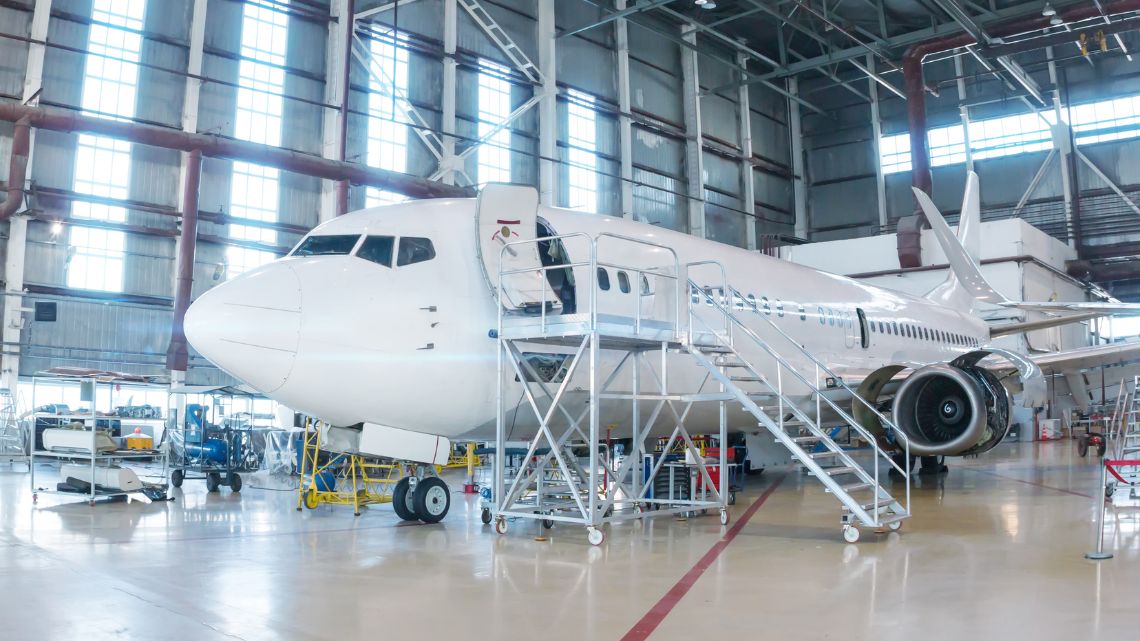
Invisible threats are the true enemies of flight. Aircraft rarely fail due to obvious mechanical breakdowns; instead, they succumb to microscopic damage that silently accumulates over thousands of flight hours. This damage is rooted in fatigue and fracture mechanics, reflecting one of aerospace engineering’s most profound challenges: predicting and controlling failure modes that cannot be seen until they are nearly critical.
While the public associates aircraft safety with weather, pilot training, and air traffic control, engineers know that structural integrity over time is the core of aviation reliability. In the modern aerospace industry, fatigue and fracture are not legacy problems solved in the 20th century; they remain central issues in next-generation aircraft, reusable space vehicles, urban air mobility systems, and even commercial drone fleets. These problems now intersect with new materials, high-cycle usage patterns, digital modeling, and real-time monitoring, reflecting how invisible failure continues to define the boundaries of what is flyable.
The Physics of Invisible Degradation
At its core, fatigue is a progressive, localized structural damage that occurs when a material is subjected to cyclic loading. Every takeoff, pressurization cycle, gust encounter, landing, and aerodynamic vibration introduces tiny stress fluctuations in aircraft structures. These fluctuations produce microstructural changes known as crack nucleation, the moment when microscopic defects begin to align into actual cracks.
Once initiated, crack propagation follows predictable patterns governed by fracture mechanics, a discipline formalized in the late 20th century and now embedded in every aircraft design standard. Fracture mechanics quantifies how crack size, stress levels, and material properties interact to determine whether a crack will arrest or rapidly lead to failure.
In metals such as aluminum alloys and titanium used in airframes and engines, fatigue cracks often originate at surface imperfections, environmental corrosion sites, or microstructural inclusions. Modern composite materials, like carbon fiber reinforced polymers (CFRP), behave differently: they can develop delamination, fiber/matrix debonding, and matrix cracking that are more difficult to detect and model. These failure modes are not just engineering curiosities, they dictate inspection schedules, determine design criteria, and influence aircraft lifetimes.
Twin Models and Predictive Health Monitoring
Aerospace engineering has embraced digital transformation not just as a convenience, but as a necessity for managing invisible failure. Until recently, fatigue life estimates were based primarily on statistical S-N curves generated from lab testing, metals were tested under controlled cyclic loads until they failed, producing empirical life data. While foundational, those methods lack specificity for operational realities. Today, aerospace engineers use digital twin technology, virtual replicas of physical aircraft that simulate fatigue accumulation using real flight data.
Airbus, Boeing, and newer entrants such as COMAC (China) and Mitsubishi (SpaceJet program) integrate flight-data monitoring into advanced structural analysis. These digital twins combine thousands of sensor inputs, vibration, strain, temperature, altitude cycles, actuator usage, with physics-based models to estimate damage progression with greater fidelity than static lab curves.
This approach enables Condition-Based Maintenance (CBM) and Prognostics and Health Management (PHM) systems that dynamically adapt inspection intervals based on real usage rather than conservative calendar limits. It has already changed how fleets are managed in commercial aviation and high-utilization military platforms.
Composite Materials
The shift toward composite airframes, like those on the Boeing 787 and Airbus A350, was celebrated for weight reduction and fuel efficiency. However, composites introduced new invisible failure modes that defy traditional metal fatigue paradigms. Unlike metals, composites do not always exhibit visible surface cracks before suffering internal structural degradation. Traditional non-destructive techniques like dye penetrant or simple radiography are often insufficient. Advanced technologies such as ultrasonic phased-array testing, shearography, thermography, and embedded fiber-optic sensors now play key roles in detecting subsurface defects earlier.
A 2023 paper published by the Journal of Composite Materials highlights how nano-engineered sensor networks embedded within composite laminates enable detection of microdelaminations long before they reach critical sizes, a breakthrough that shifts fracture detection from periodic inspection to continuous monitoring.
Designing for Damage Tolerance
Modern aerospace structures are no longer designed to be perfect; they are designed to be damage tolerant. This means engineers assume cracks will exist and design elements to sustain defined crack sizes safely until detection and repair.
Damage tolerance criteria are formalized in certification standards such as FAA Advisory Circular AC 25.571-1 and EASA CS 25.571. These require that critical structures demonstrate safe performance even with predefined crack sizes over expected lifecycle loads, accounting for fracture mechanics and material toughness. Rubber-to-road validation occurs through full-scale fatigue testing, where parts undergo tens of thousands of load cycles that replicate decades of service. The results feed back into design refinement, inspection criteria, and operational limits.
Lifecycle Engineering and Usage Profiles
Aircraft fatigue management increasingly recognizes that not all flight hours are equal. Pressurization cycles (takeoffs/landings) contribute more to fatigue than cruise hours. Hot and humid operating environments accelerate corrosion and stress corrosion cracking. Short-haul regional jets, with frequent cycles, accumulate fatigue faster than long-haul aircraft on transcontinental routes.
Modern engineers use usage profile analysis to tailor maintenance and prediction models. This approach is especially relevant for urban air mobility (UAM) vehicles and high-frequency regional platforms that may see thousands of short cycles per year, unprecedented in traditional commercial aviation and requiring new fatigue management strategies.
Regulatory Integration and Safety Assurance
Safety regulators worldwide now require evidence of fatigue and fracture resistance at every stage of design. Aircraft certification involves detailed fracture mechanics analysis, proof of inspection detectability, and validation of predictive maintenance tools.
Recent FAA and EASA directives reflect this shift: rather than purely prescriptive inspection intervals, they emphasize performance-based maintenance supported by data analytics and digital twin insights. These regulatory changes formally integrate invisible failure management into global aerospace operations.
Engineering the Unseen
Fatigue and fracture are not relics of the past; they are active challenges at the heart of aerospace innovation. Invisible failure demands methods that go beyond conservative assumptions, embracing physics-based modeling, real-time monitoring, new materials science, and lifecycle engineering.
In the evolving age of digital aircraft, autonomous systems, and high-utilization air fleets, the capacity to predict, detect, and manage what cannot be seen is no longer a luxury, but an engineering imperative. In aerospace, where every gram and every microsecond matters, designing for invisible failure is the ultimate benchmark of engineering excellence.